
Imagine needing to digitize important documents, but your current scanner is slow, clunky, or just not compatible with your shiny new Mac. Frustrating, right? Finding the perfect scanner that plays nicely with your Apple device can feel like a treasure hunt with too many false leads.
Many Mac users face this challenge. You want clear scans, fast speeds, and easy integration with your workflow, but sorting through all the technical jargon and compatibility lists is a headache. You might worry about spending money on something that won’t work as well as you hope, or that will be difficult to set up.
But don’t worry! This guide is here to help. We’ll break down what makes a scanner great for Mac users, highlight key features to look for, and suggest some top contenders. By the end, you’ll feel confident about choosing a scanner that makes your digital life much easier.
Top Scanner Mac Recommendations

- OUR MOST ADVANCED SCANSNAP. Large touchscreen, fast 45ppm double-sided scanning, 100-sheet document feeder, Wi-Fi and USB connectivity, automatic optimizations, and support for cloud services. Upgraded replacement for the discontinued iX1600
- CUSTOMIZABLE. SHARABLE. Select personalized profiles from the touchscreen. Send to PC, Mac, mobile devices, and clouds. QUICK MENU lets you quickly scan-drag-drop to your favorite computer apps
- STABLE WIRELESS OR USB CONNECTION. Built-in Wi-Fi 6 for the fastest and most secure scanning. Connect to smart devices or cloud services without a computer. USB-C connection also available

- FITS SMALL SPACES AND STAYS OUT OF THE WAY. Innovative space-saving design to free up desk space, even when it's being used
- SCAN DOCUMENTS, PHOTOS, CARDS, AND MORE. Handles most document types, including thick items and plastic cards. Exclusive QUICK MENU lets you quickly scan-drag-drop to your favorite computer apps
- GREAT IMAGES EVERY TIME, NO EXPERIENCE REQUIRED. A single touch starts fast, up to 30ppm duplex scanning with automatic de-skew, color optimization, and blank page removal for outstanding results without driver setup

- PORTABLE SCANNER FOR USE ON-THE-GO — The fastest and lightest mobile single-sheet-fed compact document scanner in its class¹
- QUICK DOCUMENT SCANNING ― This Epson ultra-fast scanner scans a single page as quickly as 5.5 seconds²; Windows and Mac compatible
- VERSATILE PAPER HANDLING ― Portable scanner scans documents up to 8.5 x 72 in; Also easily digitizes receipts and ID cards to make accounting, bookkeeping, and organizing simpler

- Scanner type: Document
- Connectivity technology: USB
- With Auto Scan Mode, the scanner automatically detects what you're scanning

- FITS SMALL SPACES AND STAYS OUT OF THE WAY. Innovative space-saving design to free up desk space, even when it's being used
- SCAN DOCUMENTS, PHOTOS, CARDS, AND MORE. Handles most document types, including thick items and plastic cards. Exclusive QUICK MENU lets you quickly scan-drag-drop to your favorite computer apps
- GREAT IMAGES EVERY TIME, NO EXPERIENCE REQUIRED. A single touch starts fast, up to 30ppm duplex scanning with automatic de-skew, color optimization, and blank page removal for outstanding results without driver setup
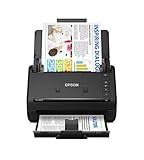
- FAST DOCUMENT SCANNING — Document scanner with feeder allows you to speed through stacks with a 50-sheet Auto Document Feeder (ADF); Efficient office scanner to help you scan more productively
- INTUITIVE, HIGH-SPEED SOFTWARE — Quickly scan with this desktop document scanner; Epson ScanSmart Software lets you easily preview scans, email files, upload to the cloud, and more; Plus, automatic file naming saves even more time
- SEAMLESS INTEGRATION — Easily incorporate your data into most document management software with the included TWAIN driver; Office document scanner integrates seamlessly with business workflows

- OUR MOST ADVANCED SCANSNAP. Large touchscreen, fast 45ppm double-sided scanning, 100-sheet document feeder, Wi-Fi and USB connectivity, automatic optimizations, and support for cloud services. Upgraded replacement for the discontinued iX1600
- CUSTOMIZABLE. SHARABLE. Select personalized profiles from the touchscreen. Send to PC, Mac, mobile devices, and clouds. QUICK MENU lets you quickly scan-drag-drop to your favorite computer apps
- STABLE WIRELESS OR USB CONNECTION. Built-in Wi-Fi 6 for the fastest and most secure scanning. Connect to smart devices or cloud services without a computer. USB-C connection also available

- Our Most Productive Desktop Scanner — AI-ready scans²; color touchscreen; fast double-sided scanning at up to 45 ppm⁴; 100-sheet Auto Document Feeder; Wi-Fi
- Epson ScanSmart¹ AI Technology — Intelligently converts your documents into smart, AI-ready data², optimized for use by the latest AI applications
- Modern Wi-Fi Scanning — Built-in wireless connectivity for fast, reliable and secure WPA2 scanning from your computer or mobile device
Choosing the Right Scanner for Your Mac
Getting a scanner for your Mac can make a big difference. You can easily turn paper documents, photos, and even old drawings into digital files. This guide will help you find the perfect scanner for your needs.
Key Features to Look For
When you shop for a scanner, keep these important features in mind:
- Resolution (DPI): This is how much detail a scanner can capture. Higher DPI means clearer images. For everyday documents, 600 DPI is usually enough. For photos or detailed artwork, aim for 1200 DPI or higher.
- Scanning Speed: How fast can the scanner capture an image? This is measured in pages per minute (PPM) or seconds per page. If you scan a lot of documents, speed matters.
- Connectivity: Most scanners connect via USB. Some also offer Wi-Fi or Ethernet for wireless scanning, which is super convenient.
- Software: Good scanning software makes your life easier. Look for software that lets you edit, organize, and save files in different formats (like PDF, JPG, TIFF). Some scanners come with OCR (Optical Character Recognition) software, which turns scanned text into editable text.
- Type of Scanner: There are a few main types:
- Flatbed Scanners: These are like a copier lid. You place items flat on the glass. They are great for photos, books, and fragile items.
- Sheet-Fed Scanners: These have a tray where you put a stack of papers. They are fast for scanning many pages.
- All-in-One Printers: Many printers also have a scanner built-in. This saves space and can be a good option if you need both.
Important Materials and Build Quality
The materials used in a scanner can affect how long it lasts and how well it works.
- Plastic Casing: Most scanners have plastic bodies. Look for sturdy, thick plastic that doesn’t feel flimsy. This helps protect the internal parts.
- Glass Bed (Flatbed Scanners): The glass on a flatbed scanner should be smooth and free of scratches. A clean glass bed ensures clear scans.
- Moving Parts: Check how smoothly the lid opens and closes, and if any paper feeders feel robust. Good construction means the scanner will hold up to regular use.
Factors That Improve or Reduce Quality
Several things can make your scanner’s performance better or worse.
- Sensor Quality: The sensor is the heart of the scanner. Better sensors capture more accurate colors and finer details.
- Light Source: A good light source ensures even illumination across the scanned area. This prevents dark spots or washed-out areas.
- Dust and Smudges: Dust on the glass or sensor will show up as spots on your scans. Regular cleaning is key.
- Software Updates: Manufacturers sometimes release software updates that improve scanning performance or add new features. Keep your software up-to-date.
- Driver Compatibility: Make sure the scanner has drivers that work well with your Mac’s operating system. Outdated drivers can cause problems.
User Experience and Use Cases
How you plan to use the scanner will help you choose the right one.
- Home Use: For scanning family photos, old letters, or school projects, a simple flatbed scanner or an all-in-one printer is usually perfect. Ease of use is important here.
- Office/Work: If you need to scan many documents quickly, a fast sheet-fed scanner with OCR software is a great choice. This helps you create searchable digital archives.
- Creative Professionals: Artists or photographers might need a high-resolution flatbed scanner to capture intricate details and vibrant colors of their work.
- Students: Scanning notes, assignments, or research papers is made easy with a reliable scanner. Wireless options can be a big help in a busy dorm room.
Using a scanner with your Mac is straightforward. You plug it in, install the software, and follow the on-screen prompts. Most Macs recognize scanners automatically, but installing the manufacturer’s software often gives you more control and features.
Frequently Asked Questions (FAQ) for Scanner Macs
Q: What is the most important feature to consider?
A: The most important feature depends on what you plan to scan. For detailed images, resolution (DPI) is key. For lots of documents, speed is more important.
Q: Do I need a special scanner for my Mac?
A: No, most standard scanners work with Macs. Just make sure it has Mac compatibility and drivers available.
Q: What does DPI mean?
A: DPI stands for Dots Per Inch. It tells you how many tiny dots of color the scanner can fit into one inch. More dots mean a clearer, more detailed picture.
Q: How do I clean my scanner?
A: You can clean the glass bed with a soft, lint-free cloth and a little bit of glass cleaner. For the inside, a can of compressed air can blow away dust.
Q: What is OCR software?
A: OCR stands for Optical Character Recognition. This software can read the text in your scanned document and turn it into editable text that you can copy and paste.
Q: Can I scan photos with any scanner?
A: Yes, but for the best results with photos, look for a scanner with a higher resolution (DPI) and good color accuracy.
Q: Are wireless scanners better?
A: Wireless scanners offer convenience because you don’t need to be plugged in with a cable. They can be great for saving space and scanning from different devices.
Q: How much should I expect to spend on a scanner?
A: Prices vary widely. Basic document scanners might start around $50-$100, while high-quality photo scanners can cost $200 or more.
Q: What’s the difference between a flatbed and a sheet-fed scanner?
A: A flatbed scanner has a glass surface where you place one item at a time. A sheet-fed scanner has a tray that can take a stack of papers and scans them quickly one after another.
Q: Will my old scanner work with a new Mac?
A: It might, but you’ll need to check if the scanner manufacturer provides updated drivers for your Mac’s current operating system. If not, you may need a new scanner.

Hi, I’m Tom Scalisi, and welcome to The Saw Blog! I started this blog to share my hands-on experience and insights about woodworking tools—especially saws and saw blades. Over the years, I’ve had the chance to work with a wide range of tools, and I’m here to help both professionals and hobbyists make informed decisions when it comes to selecting and using their equipment. Whether you’re looking for in-depth reviews, tips, or just advice on how to get the best performance out of your tools, you’ll find it here. I’m excited to be part of your woodworking journey!