
So, you’ve got your sights set on the powerful RTX 4070 Ti. That’s awesome! But what about the brain of your computer, the CPU? Picking the right one can feel like a puzzle, and if you choose poorly, your shiny new graphics card might not be able to show off its full speed. It’s a common worry: will my CPU bottleneck my 4070 Ti?
This is where we come in. We know that figuring out which CPU works best with a 4070 Ti can be confusing. You want to get the most out of your gaming or creative work, and a mismatched CPU can lead to dropped frames or slow loading times. That’s a real bummer when you’ve invested in a top-tier GPU.
By the end of this post, you’ll understand exactly what makes a CPU a good partner for the 4070 Ti. We’ll break down the important features, look at some great CPU options, and help you avoid common mistakes. Get ready to build a balanced PC that performs like a dream!
Top Cpu For 4070 Ti Recommendations


- Intel Core i7-13700KF CPU Watercooled, Intel Z790 Chipset, 32GB DDR5 5600MT/s RGB, 2TB NVMe M.2, WiFi
- NVIDIA GeForce RTX 4070 Ti, 3x Display Port/1x HDMI
- Closed Loop Liquid Cooling with 360mm Radiator

- Game with a VENGEANCE: Built with a full range of award-winning CORSAIR components and driven by CORSAIR iCUE software for unparalleled customization and control, the VENGEANCE i7400 Series is powered by a 13th Gen Intel Core CPU and cutting-edge NVIDIA GeForce RTX 40-Series graphics.
- Liquid-Cooled 13th Gen Intel Core CPU: The latest in dynamic CPU architecture so you can game and multitask without compromise, cooled by a CORSAIR iCUE H100i RGB ELITE liquid CPU cooler.
- NVIDIA GeForce RTX 40-Series Graphics: Experience lifelike virtual worlds with ray tracing and ultra-high FPS gaming with the lowest latency.

- Powered by NVIDIA DLSS 3, ultra-efficient Ada Lovelace arch, and full ray tracing
- 4th Generation Tensor Cores: Up to 4X performance with DLSS 3 vs. brute-force rendering
- 3rd Generation RT Cores: Up to 2X ray tracing performance
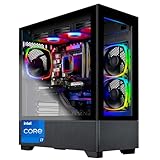
- INTEL Core i7 12700F 2.1GHz (4.9GHz Max Boost) CPU Processor | 1TB NVME SSD – Up to 30x Faster Than Traditional HDD | 360mm AIO
- NVIDIA Geforce RTX 4070 Ti 12GB GDDR6X Graphics Card (Brand may vary) | 16GB DDR4 RAM 3200 Gaming Memory with Heat Spreader | Windows 11 Home 64-bit
- 802.11 AC | No Bloatware | Graphic output options include 1 x HDMI, and 1 x Display Port Guaranteed, Additional Ports may vary | USB Ports Including 2.0, 3.0, and 3.2 Gen1 Ports | HD Audio and Mic | Free Gaming Keyboard and Mouse
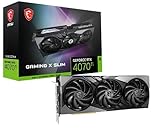
- NVIDIA GeForce RTX 4070 Ti
- Video Memory: 12GB GDDR6X
- Boost Clock: 2745 MHz

- Powered by GeForce RTX 4070 Ti SUPER
- Integrated with 16GB GDDR6X 256bit memory interface
- WINDFORCE cooling system

- - Powered by NVIDIA DLSS 3.5, ultra-efficient Ada Lovelace arch, and full ray tracing
- - IceStorm 2.0 Advanced Cooling
- - FREEZE Fan Stop, Active Fan Control
Choosing the Right CPU for Your NVIDIA RTX 4070 Ti
So, you’ve decided to get your hands on the awesome NVIDIA RTX 4070 Ti graphics card. That’s fantastic! But to make sure your new GPU runs at its best, you need a CPU that can keep up. Think of it like a sports car – you wouldn’t put a tiny engine in a sleek race car, right? Your CPU is the “brain” of your computer, and it needs to be powerful enough to feed your 4070 Ti all the information it needs to perform its magic.
Key Features to Look For
When you’re shopping for a CPU to pair with your 4070 Ti, keep these important things in mind:
- Core Count: This is like how many workers you have. More cores mean your CPU can do more tasks at the same time. For the 4070 Ti, you’ll want at least 6 cores, but 8 cores are even better. This helps with gaming and other demanding tasks.
- Clock Speed: This is how fast each worker can do their job. Higher clock speeds mean faster performance. Look for CPUs with a base clock speed of around 3.5 GHz or higher.
- Cache Size: Think of cache as a super-fast scratchpad for your CPU. A bigger cache means the CPU can access important information quicker, which speeds things up.
- IPC (Instructions Per Clock): This is a bit more technical, but it means how much work a CPU can do in one clock cycle. Newer CPUs generally have better IPC, so a recent generation CPU is a good bet.
Important Materials (What Makes it Tick!)
CPUs are made of very tiny and complex electronic parts. The main material is silicon, which is a semiconductor. This allows electricity to flow through it in a controlled way. Different manufacturing processes, often measured in nanometers (nm), determine how small and efficient these components are. Smaller nm numbers usually mean better performance and less power usage.
Factors That Improve or Reduce Quality
- Brand and Generation: Companies like Intel and AMD are the main players. Newer generations of CPUs from these brands usually offer better performance and efficiency. A brand new Intel Core i5 or AMD Ryzen 5 from the latest generation will likely be a great fit.
- Cooling: A CPU can get very hot when it’s working hard. Good cooling is super important. If your CPU overheats, it will slow down to protect itself. This is called “thermal throttling.” Make sure you have a good CPU cooler, whether it’s the one that comes with the CPU or an upgraded one.
- Motherboard Compatibility: Your CPU needs to fit into a specific slot on your motherboard. Make sure the CPU you choose is compatible with your motherboard’s socket type. This is a crucial step to avoid buying something that won’t work.
User Experience and Use Cases
A good CPU paired with your 4070 Ti means you’ll have a smooth gaming experience. You can play the latest games at high settings and resolutions without lag or stuttering. This is especially true for games that require a lot of processing power.
Beyond gaming, a powerful CPU helps with:
- Video Editing: Quickly render and export your videos.
- 3D Modeling: Design and create complex 3D objects without long waiting times.
- Streaming: Play games and stream your gameplay at the same time without your performance dropping.
- Multitasking: Easily switch between different programs and applications without your computer slowing down.
Choosing the right CPU is an investment in your overall computer performance. Don’t let a weak CPU hold back your amazing 4070 Ti!
Frequently Asked Questions (FAQ) about CPUs for the 4070 Ti
Q: What’s the most important thing to consider when buying a CPU for a 4070 Ti?
A: The most important thing is to get a CPU that’s powerful enough not to “bottleneck” your 4070 Ti. This means the CPU won’t be too slow and slow down the graphics card.
Q: Should I go with Intel or AMD?
A: Both Intel and AMD make great CPUs. It really depends on the specific models and what you can find at a good price. Check reviews for the latest models from both brands.
Q: How many cores do I really need?
A: For a 4070 Ti, 6 cores is a good starting point, but 8 cores will give you a much smoother experience, especially for demanding games and multitasking.
Q: What is “clock speed” and why does it matter?
A: Clock speed tells you how fast the CPU’s “brain” works. A higher clock speed means it can perform tasks more quickly.
Q: Do I need a super expensive CPU?
A: Not necessarily. You can find excellent value with mid-range CPUs from the latest generations that will pair well with the 4070 Ti.
Q: How does cooling affect my CPU choice?
A: Good cooling is essential. If your CPU gets too hot, it will slow down. Make sure to budget for a good CPU cooler.
Q: Can I use an older CPU with my 4070 Ti?
A: You can, but it might limit the performance of your 4070 Ti. It’s best to pair it with a more modern CPU.
Q: What does “bottlenecking” mean?
A: Bottlenecking happens when one component (like a slow CPU) holds back the performance of another component (like a powerful GPU).
Q: Should I look at the CPU’s integrated graphics?
A: For a system with a 4070 Ti, integrated graphics on the CPU are not important because the 4070 Ti will handle all your graphics needs.
Q: Where can I find good CPU recommendations for the 4070 Ti?
A: Tech review websites and YouTube channels often publish benchmarks and recommendations for CPU and GPU pairings.

Hi, I’m Tom Scalisi, and welcome to The Saw Blog! I started this blog to share my hands-on experience and insights about woodworking tools—especially saws and saw blades. Over the years, I’ve had the chance to work with a wide range of tools, and I’m here to help both professionals and hobbyists make informed decisions when it comes to selecting and using their equipment. Whether you’re looking for in-depth reviews, tips, or just advice on how to get the best performance out of your tools, you’ll find it here. I’m excited to be part of your woodworking journey!