
Imagine building your dream deck or framing a new room without tripping over a tangled air hose. That’s the freedom a cordless framing nail gun offers! For DIYers and seasoned builders alike, the convenience of ditching compressors and hoses is a game-changer.
But let’s be honest, the world of cordless nail guns can feel a bit overwhelming. You’re faced with different battery types, power levels, and features, and figuring out which one fits your project and budget can lead to serious head-scratching. You want a tool that’s powerful enough for tough jobs but easy enough to handle all day long.
That’s exactly why we’re here. By the end of this post, you’ll have a clear understanding of what makes a great cordless framing nail gun. We’ll break down the key features to look for, compare different types, and help you find the perfect tool to tackle your next big build with confidence and ease.
Top Cordless Framing Nail Gun Recommendations

- 20-Volt 30° Cordless Framing Nailer (Tool-Only)

- 20-Volt 21° Cordless Framing Nailer (Tool-Only)

- Powerful motor: capable of driving up to 3-1/4 in round head nails into laminated veneer lumber
- No need for compressors: fully cordless design eliminates the need for compressors, hoses, and costly gas cartridges
- Proper nail placement with tool-free depth adjustment

- Drives full-round head nails into dense engineered lumber with power and ease
- Drives up to 1,000 framing nails on a single charge*
- 2-mode selector switch allows operator to select sequential nailing or bump fire options
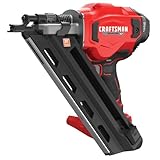
- High-Efficiency Brushless Motor - MORE RUNTIME. BETTER PERFORMANCE
- Tool-Free Depth Change - Enables quick nail adjustment for proper nail depth.
- Rapid Sequential Firing Mode - Helps complete jobs quickly.
- Cordless convenience - pneumatic framing pros can save up to 20 minutes daily in setup and clean-up time by switching from a pneumatic nailer to a DEWALT cordless framing nailer
- Lightweight design - lighten your load on tough jobs with this tool that weighs only 8.65 lbs. tool only
- Innovative nose design - align, grip, and drive nails at aggressive angles with the redesigned nose specifically built for toe-nailing applications

- POWERFUL AND EFFICIENT: This 2025 Pro Tools Innovation Award winning 18V cordless framing nailer delivers 120 joules of power, driving up to 3-1/2" nails into hard materials like engineered lumber. The air spring drive system offers performance similar to pneumatic tools with zero ramp-up time.
- USER-FRIENDLY DESIGN: Featuring a tool-less depth adjustment and an easy switch from bump to sequential mode, this cordless nailer is designed for precision and speed. The aggressive nose of the framing nailer cordless design ensures a secure grip.
- LIGHTWEIGHT AND COMPACT: Weighing only 8.4 lbs without the battery, this framing nailer is easy to maneuver, especially in tight spaces. The framing nailer cordless design eliminates the need for hoses or compressors, enhancing job site productivity.

- Drives clipped head nails into dense engineered lumber with power and ease
- Drives up to 1,000 framing nails on a single charge (battery not included)*
- 2-mode selector switch allows operator to select sequential nailing or bump fire options
Choosing Your Next Cordless Framing Nail Gun: A Simple Guide
So, you’re ready to tackle some serious building projects, and a cordless framing nail gun is your new best friend. Great choice! These tools make framing walls, building decks, and other tough jobs much faster and easier. But with so many options, how do you pick the right one? This guide will help you find the perfect nail gun for your needs.
What to Look For: Key Features
When you’re shopping, keep these important features in mind:
- Power Source: Most cordless framing nailers use either lithium-ion batteries or a combination of a fuel cell and battery. Battery-powered ones are simpler to use and maintain. Fuel cell models offer a lot of power.
- Nail Size Capacity: Make sure the nail gun can handle the nail sizes you need. Framing nails typically range from 2 inches to 3.5 inches long. Check the gun’s specifications to see its maximum nail length.
- Nail Collation Type: Nails are held together in strips. The angle of these strips is called collation. Common angles are 21-degree (plastic collated) and 30-degree (paper collated). Plastic collated nails are often easier to load and can handle more nails per strip. Paper collated nails can sometimes be more durable.
- Depth Adjustment: This lets you control how deep the nail drives into the wood. You want to be able to set it so nails sit flush with the surface, not sticking out or sinking too deep.
- Sequential vs. Contact Fire: Sequential fire means you have to pull the trigger for each nail. Contact fire lets you “bump” the nail gun against the wood and pull the trigger to fire nails quickly. Sequential fire is safer. Contact fire is faster.
- Weight and Balance: You’ll be holding this tool for a while. A lighter gun that feels balanced in your hand will reduce fatigue.
What It’s Made Of: Important Materials
The materials used in a nail gun affect its strength and how long it lasts.
- Housing: Many high-quality nail guns have a durable magnesium or aluminum alloy housing. These materials are strong and lightweight.
- Internal Components: Look for hardened steel parts inside the gun. These parts handle the impact of firing nails and need to be tough.
- Grip: A comfortable, non-slip rubber grip makes the tool easier to hold and control.
Making a Good Choice: Factors That Improve or Reduce Quality
Some things make a nail gun great, while others can make it frustrating to use.
- Things That Make it Better:
- Good Battery Life: A battery that lasts a long time means you can work longer without stopping to recharge.
- Reliable Firing Mechanism: The gun should fire nails consistently without jamming.
- Easy Nail Loading: Reloading nails should be quick and simple.
- Integrated LED Light: This helps you see your work area, especially in dim light.
- Belt Hook: A hook lets you hang the nail gun on your belt when you’re not using it.
- Things That Make it Worse:
- Frequent Jams: Constantly having to clear jammed nails slows you down and is annoying.
- Weak Firing Power: If the gun can’t drive nails all the way into hard wood, it’s not very useful.
- Heavy or Poorly Balanced Design: This makes the tool tiring to use.
- Short Battery Life: Needing to charge the battery very often interrupts your work.
Using Your Nail Gun: User Experience and Use Cases
A cordless framing nail gun is designed for heavy-duty tasks.
- User Experience: When you use a good cordless framing nailer, it feels powerful and efficient. You can quickly drive nails into wood without dealing with air hoses. It makes framing walls for a house or shed a much smoother process. You’ll appreciate the freedom of movement that no cords provide.
- Use Cases:
- Framing Walls: Building the wooden skeleton of houses, sheds, or garages.
- Deck Building: Constructing strong and sturdy outdoor decks.
- Roof Trusses: Assembling the framework for your roof.
- Subflooring: Attaching the base layer of flooring.
- General Construction: Any project that requires driving large nails quickly and powerfully.
Frequently Asked Questions (FAQ)
Q: What is the main advantage of a cordless framing nail gun?
A: The main advantage is the freedom to move around without being tied to an air hose. This makes framing jobs much faster and easier.
Q: How do I know if a nail gun has enough power?
A: Look for reviews that mention its ability to drive nails into different types of wood, especially harder woods. Also, check the tool’s specifications for its firing power.
Q: What is the difference between 21-degree and 30-degree collation?
A: The degree refers to the angle of the nail strip. 21-degree nails are usually plastic collated and fit in a slightly more compact magazine. 30-degree nails are often paper collated.
Q: Can I use any brand of nails with my nail gun?
A: It’s best to use nails recommended by the nail gun manufacturer. Using the wrong nails can cause jams or damage your tool.
Q: How important is the battery life?
A: Battery life is very important. A longer-lasting battery means you can work for extended periods without needing to stop and recharge, which keeps your project moving.
Q: What is “depth adjustment” and why do I need it?
A: Depth adjustment lets you control how deep the nail goes into the wood. You need it to make sure nails sit flush with the wood surface, not sticking out or sinking too far in.
Q: What does “sequential fire” versus “contact fire” mean?
A: Sequential fire means you pull the trigger for each nail. Contact fire allows you to quickly drive nails by bumping the nose of the gun against the wood while holding the trigger down.
Q: How can I prevent nail jams?
A: Make sure you are using the correct nail size and type for your gun and material. Keep the tool clean and lubricated as per the manufacturer’s instructions.
Q: Is a heavier nail gun better?
A: Not necessarily. While some weight can indicate sturdy construction, a tool that is too heavy will cause fatigue. Look for good balance rather than just weight.
Q: Where is a cordless framing nail gun most useful?
A: They are most useful for building projects like framing walls, decks, and roofs where speed and portability are key.

Hi, I’m Tom Scalisi, and welcome to The Saw Blog! I started this blog to share my hands-on experience and insights about woodworking tools—especially saws and saw blades. Over the years, I’ve had the chance to work with a wide range of tools, and I’m here to help both professionals and hobbyists make informed decisions when it comes to selecting and using their equipment. Whether you’re looking for in-depth reviews, tips, or just advice on how to get the best performance out of your tools, you’ll find it here. I’m excited to be part of your woodworking journey!