
As an Amazon Associate I earn from qualifying purchases.
Finding the right Portrait Sony Lens starts with your camera mount and the type of portraits you shoot. A lens that suits a full-frame body may not offer the same view on an APS-C camera.
Look at focal length, maximum aperture, autofocus, background blur, and handling. Optical stabilization can also help when you shoot handheld, especially with the Sony 50mm OSS model.
These five picks were selected from the listed features for distinct portrait needs, including classic 85mm perspective, compact everyday shooting, APS-C coverage, and wide-aperture bokeh.
This guide explains what sets each lens apart, which camera format it suits, and the compromises you should consider before choosing.
Our Top 5 Portrait Sony Lens Picks at a Glance
| Product | ||
|---|---|---|
 |
Sony FE 85mm F1.8 Classic full-frame portraits |
Check Price |
 |
Sony FE 50mm F1.8 Simple full-frame portraits |
Check Price |
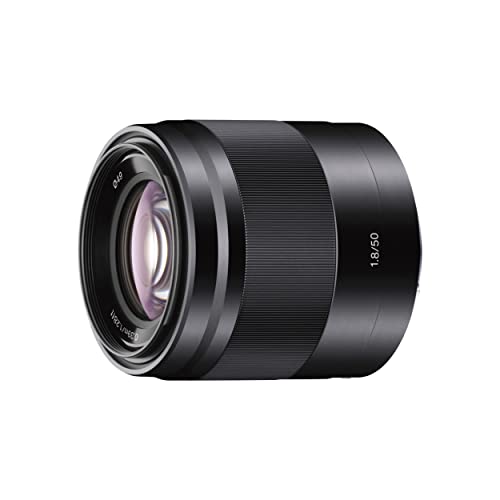 |
Sony E 50mm F1.8 OSS Stabilized APS-C portraits |
Check Price |
 |
VILTROX AF 85mm F2.0 EVO Lightweight full-frame portraits |
Check Price |
 |
Sigma 30mm F1.4 Contemporary Environmental APS-C portraits |
Check Price |
Top 5 Portrait Sony Lens: Detailed Reviews
1. Sony FE 85mm F1.8
The Sony FE 85mm F1.8 is a dedicated Portrait Sony Lens for classic full-frame framing, giving you a medium-telephoto perspective that suits head-and-shoulder work. Its wide F1.8 aperture lets you separate your subject from the background and maintain flexibility in lower light. A nine-blade circular aperture produces rounded defocused highlights, while the ED glass element is designed for corner-to-corner sharpness. The double linear motor system focuses quickly, quietly, and precisely. You also get an AF/MF switch and customizable focus-hold button for direct control.
What We Like:
- The 85mm focal length suits classic full-frame head-and-shoulder portraits.
- The F1.8 aperture creates strong subject separation and soft background defocus.
- The nine-blade circular aperture helps keep out-of-focus highlights rounded.
- Double linear motors provide fast, quiet, precise focusing for portraits and video.
- The focus-hold button and AF/MF switch give you useful direct control.
What Could Be Improved:
- The 85mm view can feel restrictive in small rooms or for wider environmental portraits.
- Its 0.13x maximum magnification is not suited to close-up detail work.
- On APS-C bodies, the 127.5mm equivalent framing makes the view even tighter.
Buy it if you want a straightforward full-frame portrait prime with a wide aperture, attractive bokeh, and quiet autofocus. Skip it if you regularly work in cramped spaces, need close-up capability, or use an APS-C camera and prefer a less tightly framed perspective.
2. Sony FE 50mm F1.8
This Portrait Sony Lens is a compact full-frame standard prime for Sony E-mount cameras, offering a useful F1.8 maximum aperture for subject separation and softly defocused backgrounds. Its seven-blade circular aperture helps keep bokeh smooth, while the 50mm focal length gives you a natural view for simple portraits without the tighter framing of an 85mm lens. The lightweight design suits everyday carrying. An aspherical element controls spherical aberration and coma, and the double-Gauss configuration helps suppress field curvature and distortion.
What We Like:
- The F1.8 aperture helps create attractive background blur in portraits.
- The 50mm view feels natural for straightforward full-frame people shots.
- Its compact, lightweight design is easy to carry with a full-frame E-mount camera.
- The seven-blade circular aperture supports smooth-looking defocused highlights.
- The optical design helps control coma, spherical aberration, field curvature, and distortion.
What Could Be Improved:
- The 50mm focal length gives you less reach and background compression than an 85mm portrait lens.
- Its standard perspective may feel too wide when you want a tight head-and-shoulders composition.
- F1.8 provides background blur, but it does not offer the extra light and separation of a wider-aperture lens.
Buy it if you want a small, uncomplicated full-frame lens for natural portraits, everyday people photography, and pleasing background blur. Skip it if you primarily shoot tight headshots or want the stronger compression and subject isolation associated with an 85mm lens.
3. Sony E 50mm F1.8 OSS
The Portrait Sony Lens pick is an APS-C-friendly standard prime for natural portraits, combining a 50mm focal length with a 32° APS-C angle of view. Its bright f/1.8 aperture helps separate your subject with defocused backgrounds, while built-in Optical SteadyShot can make handheld shooting easier in lower light. The seven-blade circular aperture supports smoother-looking blur. It is compact and lightweight, with an aluminum alloy exterior, a 1.28-foot minimum focus distance, and a modest 0.16x maximum magnification.
What We Like:
- The 50mm view gives portraits a natural mid-range perspective on APS-C cameras.
- Optical SteadyShot helps reduce camera shake when you shoot handheld.
- The f/1.8 aperture provides useful light-gathering and background separation.
- Seven rounded blades help keep out-of-focus areas smooth.
- The compact, lightweight design is easy to carry for casual portrait sessions.
What Could Be Improved:
- The 0.16x maximum magnification is not suited to close-up detail work.
- The 1.28-foot minimum focus distance limits how tightly you can frame nearby subjects.
- The 32° angle of view is relatively narrow for broad environmental scenes.
Buy it if you use a Sony APS-C camera and want a compact portrait prime with a natural 50mm view, wide aperture, and stabilization for handheld shooting. Skip it if you need close-up magnification or a wider perspective for fitting people and surroundings into the frame.
4. VILTROX AF 85mm F2.0 EVO
The Portrait Sony Lens VILTROX AF 85mm F2.0 EVO offers the classic 85mm perspective for flattering full-frame portraits, while its F2 aperture supports indoor, dusk, and low-light shooting. Its 0.74m minimum focus distance lets you frame tighter details than many standard 85mm lenses. STM autofocus should suit everyday portrait work, and the customizable Fn button, click on/off aperture ring, and AF/MF switch add useful control. At 340g, it keeps this portrait setup relatively light, with dust- and moisture-resistant sealing at the mount.
What We Like:
- The 85mm focal length gives you a familiar, natural portrait perspective.
- The F2 aperture helps you work in dimmer light without immediately reaching for a flash.
- A 0.74m close-focus distance makes detail portraits easier.
- The 340g weight suits photographers who carry their camera for long sessions.
- The Fn button and click-switch aperture ring support faster photo and video control.
What Could Be Improved:
- F2 is less bright than an F1.8 portrait lens, so it offers slightly less low-light headroom and background separation.
- The 85mm view can feel restrictive indoors or in small rooms where you cannot step back.
- Image stabilization is not listed, so you may need to watch shutter speed when shooting handheld in low light.
Buy it if you want a lightweight full-frame Sony E-mount lens for classic portraits, occasional close-ups, and controlled low-light work. Skip it if you regularly photograph in tight spaces, want the brighter F1.8 aperture, or specifically need built-in stabilization for handheld shooting.
5. Sigma 30mm F1.4 Contemporary
The Sigma 30mm F1.4 Contemporary is a Portrait Sony Lens for Sony E-mount APS-C cameras, giving you a wider view that keeps people connected to their surroundings. Its F1.4 aperture helps separate your subject from the background, while nine rounded diaphragm blades support smoother-looking out-of-focus areas. The compact design suits everyday carrying, and the stepping ring motor supports focusing operation. Sigma positions this Contemporary lens as a balance of performance and pricing. It includes front and rear caps plus a lens hood for basic protection and handling.
What We Like:
- The 30mm view works well for portraits that include meaningful surroundings.
- The F1.4 aperture gives you more subject-separation potential than a slower lens.
- Nine rounded aperture blades support smoother background rendering.
- Its compact design is practical for everyday Sony E-mount camera use.
- The included lens hood, front cap, and rear cap cover the basic accessories you need.
What Could Be Improved:
- The wider view is less suited to tightly framed, classic head-and-shoulder portraits than an 85mm lens.
- Its environmental-portrait strength may not suit you if you prefer strong background compression.
- The listed lens compatibility includes Sony E-mount cameras, but you should confirm your specific camera before buying.
Buy this Sigma if you use a Sony E-mount APS-C camera and want environmental portraits with a bright F1.4 aperture and a compact body. It suits people, places, and everyday storytelling better than tightly framed portraits. Skip it if you want the narrower perspective or stronger compression of an 85mm portrait lens.
How to Choose a Portrait Sony Lens
Choosing a Portrait Sony Lens starts with matching the focal length, sensor format, and shooting style to the portraits you want to make. A lens that works beautifully for a tightly framed headshot may feel restrictive for family groups or environmental portraits. Think about where you usually photograph, how much space you have, and whether you want the surroundings to remain part of the image.
Choose the focal length for your working distance
Shorter focal lengths let you include more of the setting and make it easier to photograph indoors or in confined spaces. They can suit casual portraits and environmental work, but you need to stay aware of your distance from the subject. Longer focal lengths give you more room between camera and subject and can make framing a face feel more focused. They are often a comfortable choice for classic head-and-shoulder portraits, provided you have enough space to step back.
Match the lens to your camera format
Check whether your Sony camera uses a full-frame or APS-C sensor before choosing a lens. The same stated focal length produces a different field of view on each format, so a lens that feels moderately wide on one camera may frame much tighter on another. This affects how much background you include, how close you need to stand, and whether the lens suits portraits of one person, couples, or groups.
Consider aperture and light
A wider maximum aperture can help you work in lower light and gives you more control over how much of the scene appears sharp. That can help separate your subject from a distracting background, though shallow focus also demands careful focusing on the eyes. If you regularly photograph moving people, do not choose an aperture only for background blur; reliable focus and a comfortable shooting distance matter just as much.
Check autofocus, stabilization, and handling
Autofocus performance matters when expressions and movement change quickly. Stabilization can help reduce camera shake when you shoot handheld, but it does not freeze a moving subject. Also consider size and weight: a lighter lens may be easier to carry and less tiring during longer sessions, while a larger lens may require more space in your bag. Review the lens mount and camera compatibility before buying.
Which Portrait Sony Lens Should You Choose?
The Sony FE 85mm F1.8 is the best overall pick here for classic full-frame portraits, offering a familiar focal length for focused, natural-looking framing. The VILTROX AF 85mm F2.0 EVO is the best alternative if keeping your kit light matters more. For simpler full-frame work, the Sony FE 50mm F1.8 remains a straightforward choice, while APS-C users should choose between stabilized 50mm framing and the wider environmental view of the Sigma 30mm F1.4 Contemporary.

Hi, I’m Tom Scalisi, and welcome to The Saw Blog! I started this blog to share my hands-on experience and insights about woodworking tools—especially saws and saw blades. Over the years, I’ve had the chance to work with a wide range of tools, and I’m here to help both professionals and hobbyists make informed decisions when it comes to selecting and using their equipment. Whether you’re looking for in-depth reviews, tips, or just advice on how to get the best performance out of your tools, you’ll find it here. I’m excited to be part of your woodworking journey!