
As an Amazon Associate I earn from qualifying purchases.
Choosing Hiking Bags can be difficult because a compact daypack, a hydration pack, and a high-capacity hiking bag serve very different needs. You want enough space for your gear without carrying more bulk than the trip requires.
Capacity, comfort, weather protection, organization, and carry style matter most. A rain cover or water-resistant fabric helps in unsettled weather, while breathable padding, adjustable straps, and useful pockets make longer walks easier to manage.
These five picks were selected for their distinct strengths rather than minor colour or size differences. The lineup includes versatile 40L and 50L packs, a hydration-focused option, a lightweight foldable daypack, and a compact sling bag.
Use the detailed reviews to match each pack to your typical load and activity, then check the buying guide for practical advice on capacity, storage, weather resistance, and portability.
Our Top 5 Hiking Bags Picks at a Glance
| Product | ||
|---|---|---|
 |
Maelstrom 40L Hiking Backpack Overall day hikes |
Check Price |
 |
Loowoko 50L Hiking Backpack Longer trips |
Check Price |
 |
TETON Sports Oasis Hydration Backpack Built-in hydration |
Check Price |
 |
G4Free 20L Packable Hiking Backpack Travel and backup carry |
Check Price |
 |
WATERFLY Crossbody Sling Backpack Minimalist essentials |
Check Price |
Top 5 Hiking Bags: Detailed Reviews
1. Maelstrom 40L Hiking Backpack
Hiking Bags need to carry more than water and a layer, and the Maelstrom 40L Hiking Backpack is built for that middle ground. Its roomy main compartment, multiple pockets, and wet/dry separation help you organize trail clothing, food, and damp gear. Water-resistant rip-stop nylon handles everyday use, while the included rain cover adds protection in heavier weather. Padded, breathable shoulder straps, a back panel, and an adjustable hip belt improve comfort. Reflective details support visibility, and side elastic cords hold trekking sticks when you are not using them.
What We Like:
- The 40L capacity gives you useful room for day-hike layers, food, and extra gear.
- Wet/dry separation keeps damp items apart from the rest of your load.
- The included rain cover adds a practical layer of weather protection.
- Multiple pockets make smaller essentials easier to organize and reach.
- Reflective details and trekking-stick storage add useful trail-focused touches.
What Could Be Improved:
- At 40L, it may feel larger than necessary for minimalist day hikes.
- The nylon is water-resistant rather than fully waterproof, so the rain cover matters in wet weather.
- A larger, multi-pocket design can be less streamlined than a compact daypack.
Buy it if you want one roomy daypack for hiking, light camping, and organized everyday trail use, especially when you carry extra layers or damp gear. Skip it if you prefer a compact, minimalist pack or usually hike with only water and a few essentials.
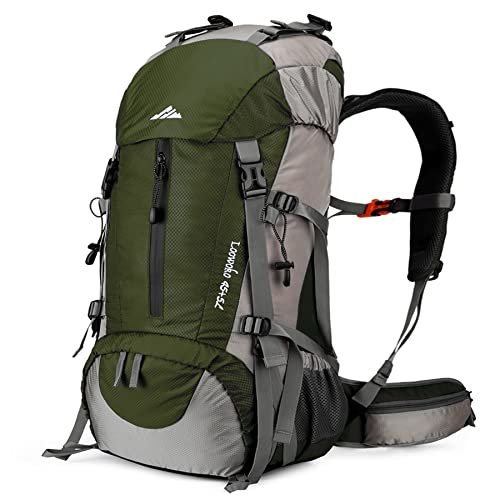
2. Loowoko 50L Hiking Backpack
For longer trips, the Loowoko 50L is one of the more capacious Hiking Bags, with room for three to five days of travel or outdoor gear. Its external extension space and compression straps help you carry bulkier loads without leaving everything loose, while the large main compartment, shoe separator, and six external pockets improve organization. The included rain cover adds protection in wet weather. At a lightweight 2.1 pounds, it remains easy to carry, though its no-internal-frame design may offer less support for very heavy packing.
What We Like:
- The 50L capacity suits multi-day hikes, camping, and longer travel.
- External extension space gives bulky clothing or equipment somewhere to go.
- Compression straps help stabilize a fuller load.
- Six external pockets and a shoe separator make gear easier to organize.
- The included rain cover helps protect your contents during wet weather.
What Could Be Improved:
- The no-internal-frame design may feel less supportive with especially heavy loads.
- A 50L pack can be more capacity than you need for short day hikes.
- The large layout may take more effort to keep organized when lightly packed.
Buy this backpack if you need substantial capacity for three-to-five-day trips, camping, or travel and value external storage and a rain cover. Skip it for lightweight day hikes or if you regularly carry heavy loads and prefer the structure and load support of an internal-frame pack.
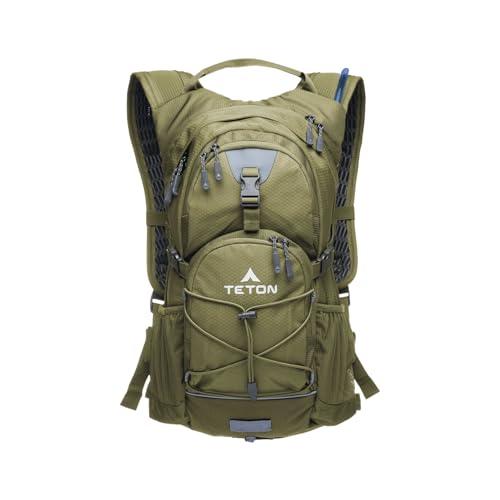
3. TETON Sports Oasis Hydration Backpack
The TETON Sports Oasis is one of the most practical Hiking Bags for active day trips, especially when easy drinking matters. Its included 2L bladder has an insulated pocket, kink-free sip tube, push-lock bite valve, and wide opening for adding ice or cleaning. Weather-guarded zippers help shield contents from rain and dirt, while the sewn-in rain cover adds protection in heavier weather. The adjustable athletic fit, breathable foam shoulder straps, bungee storage, and lightweight design suit hiking, cycling, running, and biking.
What We Like:
- The included 2L bladder lets you drink without stopping to unpack a bottle.
- The insulated bladder pocket helps keep water cold for hours.
- The wide bladder opening makes adding ice and cleaning easier.
- The adjustable athletic fit works for men, women, and youth.
- The bungee cord system gives you a quick place to secure a jacket or helmet.
What Could Be Improved:
- A 2L bladder may not provide enough water for very long outings or hot conditions.
- The hydration-focused design may feel limiting if you need to carry bulky camping equipment.
- You still need to pack carefully because water and extra clothing can use much of the available space.
Buy it if you want a lightweight hydration pack for day hikes, rides, runs, or other active outings, with weather protection included. Skip it if you need a large, structured backpack for multi-day camping, extensive camera gear, or substantial equipment.
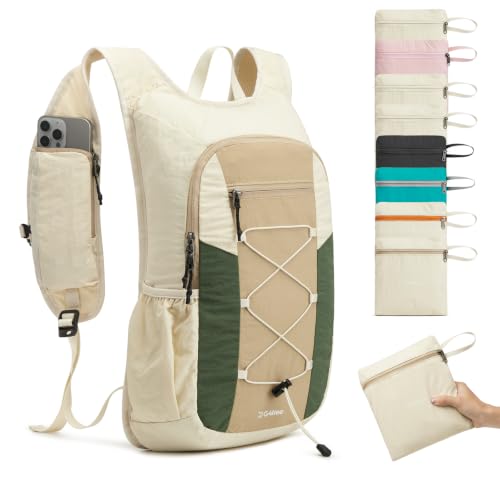
4. G4Free 20L Packable Hiking Backpack
The G4Free 20L Packable Hiking Backpack is a lightweight choice for travel, backup carry, and short outings. It weighs just 0.64 pounds, folds into its inner pocket at 6.3 × 7.1 inches, and fits easily in luggage or another bag. Water-repellent Taslan nylon helps handle light rain and abrasions. You get a zippered main compartment, inner zip and slip pockets, a front pocket, and two side pockets. The shoulder-strap phone pocket keeps your phone accessible, while the chest strap and breathable mesh shoulder straps improve comfort.
What We Like:
- The 20L capacity suits day trips and everyday carry.
- Its 0.64-pound weight adds little to your load.
- The folded size makes it useful as a travel backup bag.
- The shoulder-strap phone pocket keeps your phone within easy reach.
- Multiple pockets help separate small essentials from larger items.
What Could Be Improved:
- Water-repellent fabric is suited to light rain, not heavy wet weather.
- The 20L size may feel limiting for bulky camping gear or longer hikes.
- Its lightweight construction prioritizes portability over heavy-load carrying.
Buy this pack if you want a compact daypack for travel, light hiking, cycling, or emergency extra storage. It is especially useful when you need a bag that folds away neatly and keeps your phone accessible. Skip it if you need substantial capacity, serious weather protection, or a pack for extended camping loads.
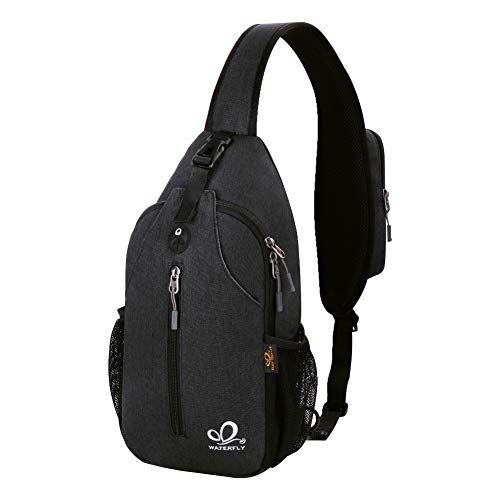
5. WATERFLY Crossbody Sling Backpack
Among Hiking Bags, the WATERFLY Crossbody Sling Backpack is a compact chest-style carry option for walks, travel, amusement parks, and light hiking. Its front zipper and buckle compartments help separate smaller items such as an iPad mini, iPhone 7 Plus, or power bank. The hidden earphone hole keeps a cable accessible, while three lower D-rings let you position the adjustable strap on either side. Its water-resistant material helps with light moisture, and the breathable strap and back should feel more comfortable during outings.
What We Like:
- The reversible strap works for left- or right-shoulder carry.
- Separate front compartments help keep small items organised.
- The hidden earphone hole provides convenient cable access.
- The breathable back and shoulder strap suit longer walks.
- The compact shape keeps daily essentials close to you.
What Could Be Improved:
- Its compact design is not suited to carrying much clothing, food, or camping equipment.
- Water-resistant material is useful for light moisture but does not make the bag waterproof.
- The sling format offers less balanced weight distribution than a conventional backpack.
Buy it if you want a compact bag for a phone, power bank, small tablet, and other daily essentials during walks, travel, or amusement-park visits. Skip it for full-day hikes, overnight trips, or any outing where you need substantial clothing, food, or camping gear.
How To Choose The Right Hiking Bag
Choosing Hiking Bags starts with matching the bag to the way you will use it. A comfortable pack for a few hours may be a poor choice for an overnight trip, while a large camping pack can feel unnecessarily bulky on a short walk. Think about your usual load, how far you travel, and which features you will genuinely use before comparing styles.
Choose the right capacity
Capacity determines how much you can carry without forcing you to overpack. Smaller bags suit water, snacks, a light layer, a phone, and basic personal items. Mid-sized packs give you room for extra clothing, food, or safety equipment on a full-day hike. For camping or longer trips, you need more space for shelter, cooking equipment, clothing, and other bulky gear.
Remember that stated capacity does not tell you how efficiently a bag uses its space. Compartments, external attachment points, and pockets can make a pack easier to organise, but too many sections may limit flexibility for oddly shaped items.
Prioritise fit and carrying comfort
A good hiking pack should sit securely without restricting your movement. Look for adjustable shoulder straps, a stable back panel, and a waist or hip belt when you expect to carry heavier loads. Padding can improve comfort, but ventilation also matters if you hike in warm conditions.
Pay attention to how the weight sits on your body. A bag that pulls backward or shifts from side to side can become tiring even if its capacity seems suitable. If possible, adjust the straps with the kind of load you normally carry.
Consider access and weather protection
Think about how quickly you need to reach your essentials. Multiple pockets can keep snacks, maps, and electronics organised, while a wider opening may make it easier to pack and unpack larger items. For changing weather, water-resistant materials or a rain cover can help protect your gear, but they do not necessarily make a bag fully waterproof.
Match features to your routine
Hydration compatibility, breathable materials, compression straps, and packable designs can all be useful, depending on your plans. A hydration-focused design may suit hot, active hikes, while a lightweight foldable bag works well as a travel spare. For camping, favour carrying stability and usable capacity over features that add complexity without helping your usual trips.
Which Hiking Bag Should You Choose?
The Maelstrom 40L Hiking Backpack is the best overall pick for typical day hikes, offering a practical middle ground for carrying everyday trail essentials. Choose the Loowoko 50L Hiking Backpack instead if you need more room for longer trips. The TETON Sports Oasis suits built-in hydration, while the G4Free 20L and WATERFLY Crossbody are better for travel backups or a small load of minimalist essentials.

Hi, I’m Tom Scalisi, and welcome to The Saw Blog! I started this blog to share my hands-on experience and insights about woodworking tools—especially saws and saw blades. Over the years, I’ve had the chance to work with a wide range of tools, and I’m here to help both professionals and hobbyists make informed decisions when it comes to selecting and using their equipment. Whether you’re looking for in-depth reviews, tips, or just advice on how to get the best performance out of your tools, you’ll find it here. I’m excited to be part of your woodworking journey!