
As an Amazon Associate I earn from qualifying purchases.
Choosing a Digital Radio Scanner can be confusing because digital systems differ, and not every scanner handles the same formats or signal conditions. You need to match the scanner to where you listen and the types of communications you want to follow.
Start with the features that affect daily use: True I/Q or SDR performance for difficult signals, trunking support, digital formats, portability, channel capacity and setup tools. A home or vehicle scanner may suit you better than a handheld, while a portable model offers more flexibility.
These five picks cover advanced SDR scanners, base and mobile use, weak-signal and simulcast listening, broad format support and simpler digital scanning. The selection avoids analog-only models and focuses on meaningful differences rather than cosmetic variations.
Below, you will find the strengths and trade-offs of each model, followed by a buying guide to help you choose the right format, features and scanning approach.
Our Top 5 Digital Radio Scanner Picks at a Glance
| Product | ||
|---|---|---|
 |
Uniden SDS150 Digital Radio Scanner Advanced handheld users |
Check Price |
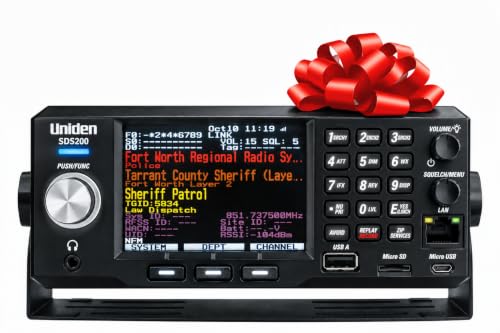 |
Uniden SDS200 Base/Mobile Digital Scanner Home or vehicle scanning |
Check Price |
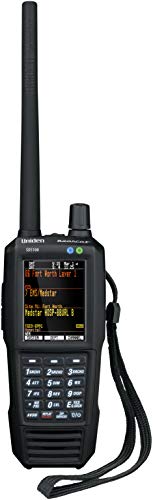 |
Uniden SDS100 True I/Q Handheld Scanner Weak-signal handheld scanning |
Check Price |
 |
Whistler TRX-1 Handheld Digital Scanner Multi-format portable scanning |
Check Price |
 |
Uniden BCD160DN Handheld Digital Scanner DMR and NXDN listeners |
Check Price |
Top 5 Digital Radio Scanner Picks: Detailed Reviews
1. Uniden SDS150 Digital Radio Scanner
The Uniden SDS150 is a Digital Radio Scanner for advanced handheld users who want strong performance in difficult signal conditions. Its software-defined radio and True I/Q receiver are designed to improve weak-signal reception, while enhanced sensitivity adds further help with signal capture and filtering. A built-in GPS receiver supports location-aware use, and U/AWARE smartphone connectivity adds another way to work with the scanner. The charge cradle includes an extra battery charging slot, although the extra battery is sold separately. JIS4/IPX4 water resistance makes it better suited to portable field use.
What We Like:
- SDR and True I/Q technology target weak-signal environments.
- Built-in GPS supports portable, location-aware scanning.
- The charge cradle can charge the scanner and an additional battery.
- U/AWARE smartphone app connectivity adds useful flexibility.
- JIS4/IPX4 water resistance suits field use better than an unprotected handheld.
What Could Be Improved:
- The extra battery charging slot is useful, but the extra battery costs extra and is sold separately.
- The scanner is water-resistant, not described as waterproof, so you still need to protect it from heavier exposure.
- Its extensive feature set may be more than casual listeners need.
Buy the SDS150 if you want Uniden’s most advanced listed handheld, especially for weak-signal monitoring, GPS-assisted field use, and SDR performance. It suits serious portable listeners who value the cradle and U/AWARE support. Skip it if you want a simpler scanner or do not need advanced handheld features.
2. Uniden SDS200 Base/Mobile Digital Scanner
The Uniden SDS200 is a base/mobile Digital Radio Scanner built for home or vehicle use. True I/Q technology supports its digital performance, while the HomePatrol database includes known radio systems across the US and Canada and receives weekly main-database updates through Sentinel. Location-based scanning lets you enter a ZIP or postal code, GPS coordinates, or use Auto-locate to choose nearby systems. You can also create Favorites Lists and scan them alongside the full database. Its 3.5-inch customizable color display provides flexible information and color-field choices.
What We Like:
- The HomePatrol database reduces the work of finding local systems.
- Location-based scanning quickly selects services near your chosen location.
- True I/Q technology is designed for advanced digital scanning performance.
- Favorites Lists let you organise systems for more focused scanning.
- GPS compatibility can automatically adjust system selection while travelling with a connected receiver.
What Could Be Improved:
- It is a base/mobile scanner, so it is less convenient to carry than a handheld model.
- The compatible GPS receiver is not included.
- The many display and scanning customisation options may take time to configure.
Buy the SDS200 if you want a capable scanner for a home desk, vehicle, or mobile setup and value database-led, location-based scanning. It suits listeners who want digital performance and organisation tools. Skip it if you need a compact handheld or want a simple, minimal-setup scanner.
3. Uniden SDS100 True I/Q Handheld Scanner
The Uniden SDS100 is a Digital Radio Scanner built for improved digital performance in weak-signal and simulcast areas. Its True I/Q receiver captures the complete signal waveform for clearer handling of challenging RF environments. You can start scanning by entering a ZIP or postal code, while the built-in HomePatrol Database covers known radio systems in the US and Canada. Location-based scanning can use coordinates, auto-location, or a compatible GPS receiver. The customizable color display lets you choose field colors and, for many fields, the information shown.
What We Like:
- True I/Q reception is designed for difficult weak-signal and simulcast environments.
- ZIP or postal-code programming makes initial setup more approachable.
- The included HomePatrol Database covers known US and Canadian radio systems.
- Sentinel software lets you update the database as Uniden refreshes it weekly.
- The customizable display helps you tailor colors and selected information fields.
What Could Be Improved:
- A GPS receiver is not included, so precise GPS-based scanning requires additional hardware.
- Using Sentinel software for database updates adds a computer-based step to ongoing maintenance.
- The scanner offers many location and display controls, which may take time to configure to your preferences.
Buy the SDS100 if you need a handheld digital scanner focused on weak signals, simulcast performance, and location-based scanning. It suits listeners who value database-assisted setup and customization. Skip it if you want a simpler receiver or do not need digital performance in challenging RF environments.
4. Whistler TRX-1 Handheld Digital Scanner
The Whistler TRX-1 is a portable Digital Radio Scanner for listeners who need broad format support in a compact, one-handed design. It handles APCO P25 Phase I and II, DMR, and NXDN, giving you access to varied digital systems. You can organise stored objects into up to 200 custom scanlists, assign the same object to multiple lists, and use the dedicated Skywarn list. Recording captures up to 50 hours on the included 2GB MicroSD card, while programmable alarms, a tri-colour LED, wake-up scanning, and raw discriminator output add useful flexibility.
What We Like:
- Supports P25 Phase I and II, DMR, and NXDN in one handheld scanner.
- Up to 200 custom scanlists let you organise channels around locations or listening needs.
- Recording and playback make it easy to review up to 50 hours of radio traffic.
- The programmable alarm and tri-colour LED provide clear visual and audible notifications.
- Wake-up scanning can automatically power on and begin monitoring at a scheduled time.
What Could Be Improved:
- The included 2GB MicroSD card limits recordings to the stated 50-hour capacity.
- Raw discriminator output is mainly useful if you plan to work with third-party decoding software.
- The extensive scanlist and alert controls may require more setup than a simpler scanner.
Buy the Whistler TRX-1 if you want a portable scanner with P25, DMR, and NXDN support, detailed scanlist control, and built-in recording. It suits listeners who value flexible monitoring and scheduled operation. Skip it if you want a simpler device with little configuration or have no use for recording and advanced digital features.
5. Uniden BCD160DN Handheld Digital Scanner
The Uniden BCD160DN is a Digital Radio Scanner for listening to conventional DMR and NXDN systems, with APCO P25 Phase 1 and 2 added through a free firmware update. Its 1,000 channels and alpha tags help you organise and identify stations, while the band scope helps you locate active signals. Rapid system and channel number tagging makes setup and browsing faster. DCS/CTCSS rapid decode can identify analogue tone settings, and free Uniden software supports PC programming, profiles, favourites, databases and firmware updates.
What We Like:
- Conventional DMR and NXDN decoding works out of the box.
- The 1,000-channel capacity gives you room for organised channel lists.
- Band scope helps you find active signals across supported bands.
- Rapid tagging makes systems and channels easier to identify.
- Rechargeable AA Ni-MH batteries and a USB charging cable are included.
What Could Be Improved:
- It does not support trunking, limiting it to conventional systems.
- APCO P25 Phase 1 and 2 require a free firmware update rather than being available immediately.
- Non-rechargeable AA alkaline batteries are not included.
Buy the BCD160DN if you mainly listen to conventional DMR or NXDN channels and want useful discovery and tagging tools in a handheld scanner. It also suits listeners willing to manage channels with PC software. Skip it if you need trunking support or want P25 decoding without updating the firmware.
How To Choose A Digital Radio Scanner
Choose the right format for your listening
A Digital Radio Scanner should match the kinds of transmissions you want to hear, not just the shape of the radio. Start by checking which digital formats matter to you, then compare each model’s stated focus. If you specifically listen to DMR or NXDN, a scanner identified for those formats deserves priority over a model chosen only for its general portability.
Match the scanner to your location
Decide where you will use the scanner most often. A handheld suits listening while moving around, travelling, or monitoring from different locations. A base or mobile model makes more sense if you plan to scan mainly at home or in a vehicle, where a larger, more fixed setup may be more convenient.
Consider signal conditions
Your surroundings influence how useful a scanner feels in daily use. If weak signals are a major concern, look for a model specifically positioned for weak-signal handheld scanning rather than assuming every portable scanner will serve the same purpose. This factor matters particularly if you listen from challenging locations or need a handheld you can carry between areas.
Be realistic about controls and complexity
Advanced features can help you manage more demanding listening, but they may also require more time to learn. Consider whether you want a scanner aimed at advanced handheld users, a simpler portable focus, or a radio designed around home and vehicle use. A multi-format model can be appealing if your listening is varied, while a more targeted choice may be sensible when you already know which digital systems you need.
Finally, compare the stated use case with your routine rather than choosing by model name alone. The best purchase is the one whose format support, signal focus, and physical design fit how and where you actually listen.
Which Digital Radio Scanner Should You Choose?
The Uniden SDS150 Digital Radio Scanner is the best overall pick for advanced handheld users because its stated focus suits listeners who want a more capable portable option. The Uniden SDS200 is the best alternative if you mainly scan at home or in a vehicle, where its base/mobile design is the more natural fit. Choose the SDS100 instead when weak-signal handheld scanning is your priority, or consider the TRX-1 and BCD160DN for their specific format-focused use cases.

Hi, I’m Tom Scalisi, and welcome to The Saw Blog! I started this blog to share my hands-on experience and insights about woodworking tools—especially saws and saw blades. Over the years, I’ve had the chance to work with a wide range of tools, and I’m here to help both professionals and hobbyists make informed decisions when it comes to selecting and using their equipment. Whether you’re looking for in-depth reviews, tips, or just advice on how to get the best performance out of your tools, you’ll find it here. I’m excited to be part of your woodworking journey!