
As an Amazon Associate I earn from qualifying purchases.
Choosing a Micro Learning App can be difficult because learning products vary from guided screen content to hands-on robotics. The right pick depends on whether you want short lessons, creative coding projects, or a broader learning setup for a child.
Look for clear tutorials, age-appropriate controls, and a useful path beyond the first activity. Hardware kits can make programming more tangible, but they may require assembly, a compatible micro:bit, or batteries.
These five picks were selected from the available products for their learning content, coding support, app access, or practical STEM activities. They cover classroom teaching, robotics, structured lessons, and general educational tablet use.
The guide starts with the strongest all-around coding options, then moves to more focused robotics and tablet-based choices. Each pick includes its best use and the trade-off to consider.
Our Top 5 Micro Learning App Picks at a Glance
| Product | ||
|---|---|---|
 |
BirdBrain Finch Robot Starter Flock classroom coding programs |
Check Price |
 |
BirdBrain Finch Robot 2.0 with micro:bit guided robotics exploration |
Check Price |
 |
FREENOVE Micro:Rover Kit for BBC micro:bit app-based rover projects |
Check Price |
 |
ACEBOTT Wireless Controller for micro:bit Kit structured controller coding |
Check Price |
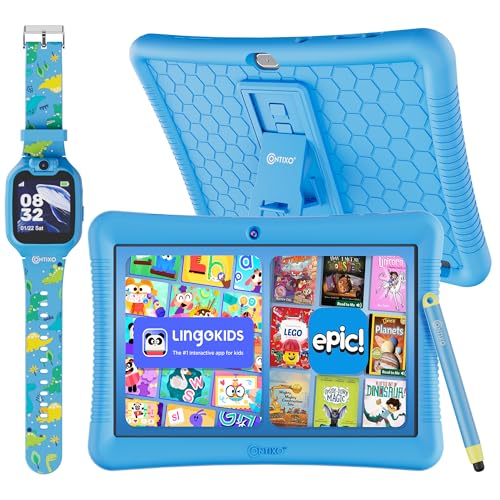 |
Contixo 10-inch Kids Tablet and Smartwatch Bundle younger learners and families |
Check Price |
Top 5 Micro Learning App: Detailed Reviews
1. BirdBrain Finch Robot Starter Flock
For a classroom using a Micro Learning App approach, the BirdBrain Finch Robot Starter Flock turns coding lessons into hands-on robotics projects. Its 30+ free activities, student tutorials, and teacher professional development support a clear path from beginner block and icon coding to advanced text-based programming. The robot supports eight coding languages, works with tablets and Chrome, and offers sensors for line tracking, obstacles, light, and sound. A rechargeable battery rated for more than seven hours helps teachers run longer sessions without frequent charging.
What We Like:
- Free activities and tutorials give teachers ready-made starting points.
- Eight coding languages let students continue learning as their skills develop.
- The low-floor, high-ceiling design suits learners from age five through college.
- Sensors make abstract code produce visible, physical results.
- Seven-plus hours of battery runtime can cover extended classroom use.
What Could Be Improved:
- You still need compatible tablets, Chrome devices, or other supported hardware for programming.
- The wide choice of languages and progression levels may require teacher planning to avoid overwhelming beginners.
- Its classroom-focused design may be more equipment and curriculum than a casual learner needs.
Buy it for schools, clubs, and families that want a structured route from first coding concepts to more advanced programming. It is especially useful when teachers need free lessons and professional development. Skip it if you want a simple standalone toy without device setup or classroom-oriented activities.
2. BirdBrain Finch Robot 2.0 with micro:bit
If you want a Micro Learning App experience with physical feedback, the BirdBrain Finch Robot 2.0 with micro:bit turns code into movement, lights, sounds, and drawings. It supports MakeCode, Snap, Python, and other coding languages, so beginners can start with blocks while advanced learners progress to text-based programming. Line tracking, obstacle detection, light sensors, tri-color LEDs, a buzzer, and a marker holder create varied robotics projects. More than 30 free tutorials, Python lessons, and device support for tablets, Chromebooks, Windows, Mac, and Linux add flexibility.
What We Like:
- MakeCode and Snap offer accessible starting points for younger beginners.
- Python support gives older learners a path toward text-based coding.
- Sensors and movement make programming results visible and interactive.
- The marker holder adds drawing projects beyond standard driving exercises.
- Tutorials and broad device compatibility suit classrooms and home learning.
What Could Be Improved:
- The wide choice of coding languages may feel less focused for learners who need one clearly structured path.
- You will need a compatible micro:bit setup and a supported device to use its programming features.
Buy it if you want a reusable robotics platform that can grow from block coding into Python, whether for home projects or classroom instruction. It suits ages 5–16 and adults who enjoy guided experimentation. Skip it if you want a self-contained toy or a simple, single-purpose coding activity.
3. FREENOVE Micro:Rover Kit for BBC micro:bit
The FREENOVE Micro:Rover Kit for BBC micro:bit is a hands-on Micro Learning App pick that combines a two-wheel rover with several sensors and the included micro:bit V2. You can build projects for obstacle avoidance, light-tracing, line-tracking, melodies, and remote control using block-based programming or Python. The Freenove App lets you control the rover wirelessly from an Android device, tablet, or iPhone, while another micro:bit offers a second control option. A downloaded step-by-step tutorial supports assembly and example projects.
What We Like:
- Block-based and Python code support different learning levels.
- Several sensors make the rover useful for varied robotics projects.
- Wireless control works through the Freenove App on phones and tablets.
- The included micro:bit V2 lets you start without buying that board separately.
- Example projects give you a structured path beyond assembly.
What Could Be Improved:
- Batteries are not included, so you must buy them separately using the downloaded tutorial’s guidance.
- The tutorial is downloaded from the product-box link and does not come as a paper guide.
- Remote control through another micro:bit requires an extra micro:bit.
Buy this if you want a project-focused rover for learning block coding, Python, sensors, and wireless control through practical builds. It suits learners comfortable following a downloaded guide and families or classrooms that already have compatible devices. Skip it if you need included batteries, paper instructions, or a ready-to-run kit.
4. ACEBOTT Wireless Controller for micro:bit Kit
This Micro Learning App-style STEM kit pairs a wireless controller with a compatible micro:bit robot and an eight-lesson MakeCode course. The joystick and four responsive buttons give learners direct control, while the thicker grip and curved edges support comfortable handling during play. Wireless communication removes cable clutter, and the built-in vibration motor provides immediate haptic feedback as learners code and drive. The course covers programming basics, wireless communication, and robot control, making the kit suitable for beginners at home, in classrooms, or in STEM clubs.
What We Like:
- The eight-lesson MakeCode course gives beginners a clear starting path.
- Wireless control keeps robot play free from tangled cables.
- The joystick and four buttons support hands-on robot control.
- Vibration feedback makes coding actions feel more immediate.
- The thicker grip and curved edges should feel comfortable during longer sessions.
What Could Be Improved:
- You need a compatible micro:bit robot setup, so this is not a complete standalone coding experience.
- Beginners may appreciate the structured course, but experienced coders could find eight lessons limiting.
- The controller focuses on MakeCode and micro:bit projects, which narrows its usefulness outside that ecosystem.
Buy it if you want a guided, hands-on introduction to micro:bit coding with physical robot control and tactile feedback. It suits classrooms, STEM clubs, and families starting with block coding. Skip it if you need a standalone robot, broader programming options, or an advanced curriculum.
5. Contixo 10-inch Kids Tablet and Smartwatch Bundle
As a Micro Learning App pick, the Contixo bundle combines a 10-inch Android tablet with Epic and Lingokids content, plus a kids’ smartwatch with games. Kids Place lets you manage screen time and filter websites, apps, and video channels, while full Google access allows additional Android apps. The tablet includes 32GB of storage, 2GB RAM, a 1.6 GHz quad-core processor, and a claimed 10-hour battery. Its kid-proof case suits children aged 3 and up, and the watch uses non-toxic ABS plastic with a soft, sweatproof silicone strap.
What We Like:
- Epic and Lingokids provide ready-to-use learning content for younger children.
- Kids Place gives parents control over screen time and filtered content.
- Full Google access lets families add suitable Android apps.
- The protective case is designed for small hands and everyday handling.
- The smartwatch adds games and a wearable activity to the bundle.
What Could Be Improved:
- Full Google access offers flexibility, but it also means you must manage which additional apps your child uses.
- The 2GB of RAM may be limiting for families expecting heavier multitasking.
- The learning experience is geared toward younger children, so older learners may outgrow it sooner.
Buy it if you want a starter tablet for a child aged 3 or older, with built-in learning content, parental controls, and a smartwatch included. Skip it if you want an open-ended STEM robotics kit or a device aimed at older students who need more demanding software.
How to Choose a Micro Learning App
Start with the learning goal
The right Micro Learning App purchase should match what the learner wants to do, not just the device or kit that looks most interesting. Decide whether the priority is classroom coding, guided robotics, rover projects, controller programming, or a broader family learning experience. A focused goal makes it easier to judge whether the activities support real progress rather than offering disconnected demonstrations.
Choose the right level of guidance
Consider how much help the learner needs to get started. Beginners often benefit from structured lessons, clear project steps, and visible outcomes. More confident learners may prefer open-ended challenges that let them change code, experiment with movement, and solve problems independently. Check whether the learning path supports a gradual move from following instructions to making original projects.
Check compatibility and setup
Before buying, confirm what hardware, software, apps, and devices the experience requires. A kit may depend on a compatible micro:bit, a tablet, a computer, or a wireless controller, so the family or classroom should already have—or be ready to provide—the necessary equipment. Also consider setup time, charging, pairing, and whether an adult will need to help with the first session.
Think about use, support, and growth
For classrooms, look for activities that can work with multiple learners and fit the available teaching time. For home use, consider storage, portability, and whether siblings or parents can participate. The most useful choice should offer enough variety to hold attention beyond the first project, while remaining manageable for the learner’s age and confidence. Finally, review the available instructions and learning materials before purchasing; clear guidance can matter as much as the hardware itself.
Which Micro Learning App Should You Choose?
The BirdBrain Finch Robot Starter Flock is the best overall pick for learners who need classroom coding programs and a clear route into hands-on STEM work. The BirdBrain Finch Robot 2.0 with micro:bit is the best alternative if guided robotics exploration is the stronger priority. Both choices fit a structured learning setting, but your final decision should follow the learner’s goals, required hardware, and preferred level of independence.

Hi, I’m Tom Scalisi, and welcome to The Saw Blog! I started this blog to share my hands-on experience and insights about woodworking tools—especially saws and saw blades. Over the years, I’ve had the chance to work with a wide range of tools, and I’m here to help both professionals and hobbyists make informed decisions when it comes to selecting and using their equipment. Whether you’re looking for in-depth reviews, tips, or just advice on how to get the best performance out of your tools, you’ll find it here. I’m excited to be part of your woodworking journey!