
As an Amazon Associate I earn from qualifying purchases.
Internet Radio can give you far more choice than a conventional tuner, but the right model depends on how you plan to listen. Some radios focus on simple bedside use, while others add Bluetooth, podcasts, FM, or home-audio connections.
Consider the controls, display, preset capacity, alarm features, and whether you need a built-in speaker. Wi-Fi-only models suit home listening, while a rechargeable option or a multi-band radio makes more sense if you want extra flexibility.
These five picks were selected from the listed features, with each serving a different use case rather than repeating colour or size variants. They cover compact bedside radios, portable stereo listening, networked home audio, and broader radio reception.
Below, you’ll find the strongest option for most listeners first, followed by focused alternatives and a quick guide to choosing the right Internet Radio for your setup.
Our Top 5 Internet Radio Picks at a Glance
| Product | ||
|---|---|---|
 |
Ocean Digital WR-393 Internet Radio Best overall home listening |
Check Price |
 |
MangoKit SR40 Stereo Internet Radio Portable stereo listening |
Check Price |
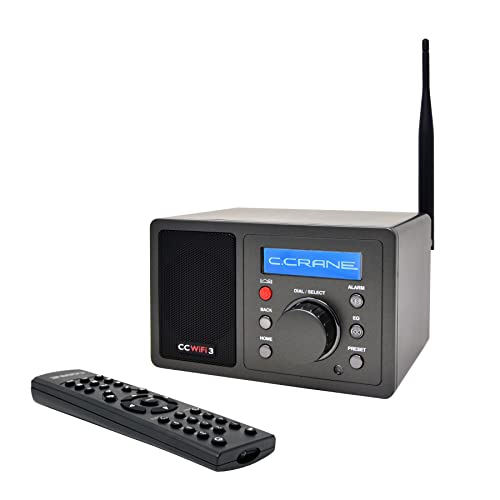 |
C. Crane CC WiFi 3 Internet Radio Bedside listening and alarms |
Check Price |
 |
Ocean Digital WR-03M Internet Radio Receiver Connecting an existing stereo |
Check Price |
 |
CHOYONG LC100 Smart Internet Radio Multi-band radio enthusiasts |
Check Price |
Top 5 Internet Radio: Detailed Reviews
1. Ocean Digital WR-393 Internet Radio
The Ocean Digital WR-393 is an Internet Radio designed for home listening, with access to more than 30,000 stations and podcasts through Skytune over 2.4GHz Wi-Fi. Its 3.5-inch color display shows station logos, artist and song information, plus a large clock, while big buttons make everyday control straightforward. Bluetooth 5.3 lets you use it as a wireless speaker for phone audio. You can save up to 150 favorite stations, organize them into categories, listen to FM, and set dual alarms or a sleep timer.
What We Like:
- The color display makes station details and clock information easy to see.
- Bluetooth 5.3 gives you a convenient way to stream audio from your phone.
- The 150-station favorite list suits households with varied listening habits.
- Podcast access expands the radio beyond live broadcasts.
- Dual alarms, snooze, and a sleep timer make it useful in a bedroom or kitchen.
What Could Be Improved:
- Wi-Fi is limited to the 2.4GHz band, so it does not support 5GHz networks.
- Its broad mix of internet stations, podcasts, favorites, Bluetooth, and FM may feel excessive if you only want a basic radio.
Buy the WR-393 if you want one home radio for internet stations, podcasts, Bluetooth audio, FM, and alarm use, especially if a clear color screen matters. Skip it if your Wi-Fi relies on 5GHz only or you want a simpler radio with fewer listening options.
2. MangoKit SR40 Stereo Internet Radio
The MangoKit SR40 is an Internet Radio designed for portable stereo listening, combining Wi-Fi stations, podcasts, Bluetooth, FM, and an AUX input in a wooden cabinet. Its rechargeable battery provides over 10 hours of continuous playback, so you can move it around without keeping it plugged in. True 2.0 stereo uses separate left and right speakers for a fuller, more natural soundstage than a single-speaker radio. You also get access to more than 50,000 worldwide stations, up to 150 presets, and alarm-clock functions for everyday use.
What We Like:
- Over 10 hours of rechargeable playback makes it practical for moving between rooms or listening away from an outlet.
- True 2.0 stereo provides genuine left-right channel separation from two speakers.
- Bluetooth and AUX input let you use it with phones, tablets, and wired audio sources.
- More than 50,000 internet stations and integrated podcasts provide broad listening variety.
- FM support, 150 presets, and alarm functions cover local radio and daily routines.
What Could Be Improved:
- DAB digital radio is optional and available in European countries, so it is not a universally useful feature.
- The listed battery claim is over 10 hours, but no more precise runtime is provided.
- Its many listening modes may be more than you need if you only want a simple single-purpose radio.
Buy the SR40 if you want portable Internet Radio with real stereo sound, rechargeable playback, Bluetooth, FM, and a substantial station library. It suits kitchens, bedrooms, and other rooms where you may move the radio. Skip it if you specifically need broadly available DAB or prefer a simpler radio with fewer functions.
3. C. Crane CC WiFi 3 Internet Radio
The C. Crane CC WiFi 3 Internet Radio is a compact bedside-focused tuner with access to more than 25,000 stations organized by location, genre, and popularity. Its clock, dual alarm, sleep timer, adjustable backlight, and large remote make everyday operation practical from bed. Bluetooth receiving lets you stream audio from a phone or tablet, while the line-out can feed an amplified speaker system or AM/FM receiver. An adjustable equalizer and stereo headphone jack add listening flexibility. The included 5dBi antenna is intended to improve 2.4 GHz Wi-Fi reception, and U.S.-based technical support backs the two-year limited warranty.
What We Like:
- More than 25,000 stations give you broad access to international, local, and genre-based listening.
- The dual alarm and seven sleep-timer settings suit bedside routines.
- Bluetooth receiving lets you play audio from a smartphone or tablet.
- Line-out and an adjustable equalizer make it useful with larger audio systems.
- The large remote, adjustable backlight, and headphone jack support comfortable bedside use.
What Could Be Improved:
- It is primarily a bedside radio, with a compact design rather than a stated battery-powered setup for untethered listening.
- Bluetooth is listed as receiving only, so the feature is for sending audio to the radio rather than transmitting radio audio to Bluetooth headphones or speakers.
- The radio depends on Wi-Fi reception, making the included antenna especially relevant for 2.4 GHz network range.
Buy it if you want a compact bedside Internet Radio with thousands of stations, two alarms, a sleep timer, remote control, and phone streaming. Skip it if you need a battery-powered portable radio or Bluetooth transmission to wireless headphones or speakers.
4. Ocean Digital WR-03M Internet Radio Receiver
The Ocean Digital WR-03M Internet Radio Receiver is a speaker-free tuner for adding modern listening options to an existing home audio system. It accesses thousands of stations through Wi-Fi or LAN, plus podcasts and local FM, while Bluetooth handles music from your phone. Optical and stereo line outputs give you flexible connections, and UPnP/DLNA lets you stream from a networked PC or NAS. The 3.2-inch color screen, remote control, favorites, sleep timer, alarms, EQ modes, and Skytune web control make daily operation more convenient.
What We Like:
- Optical and line-out connections make it easy to integrate with a stereo or other audio system.
- Wi-Fi and LAN provide access to global stations, podcasts, and FM without relying on one source.
- Bluetooth gives you a straightforward way to play music from your phone.
- UPnP/DLNA support lets you stream music from compatible computers or NAS drives.
- The remote, color screen, favorites, alarms, and sleep timer suit relaxed home listening.
What Could Be Improved:
- There is no built-in speaker, so you must connect it to separate audio equipment to hear anything.
- Its many playback, network, and control options may feel excessive if you only want a simple radio.
- FM listening is included, but the receiver is primarily designed around network and connected-system use.
Buy the WR-03M if you already own a stereo, amplifier, or powered speaker setup and want Internet Radio, FM, Bluetooth, podcasts, and network streaming in one component. It suits listeners who value optical or LAN integration. Skip it if you want a self-contained radio for a bedside table or kitchen.
5. CHOYONG LC100 Smart Internet Radio
The CHOYONG LC100 is an Internet Radio that also covers FM, AM, MW, LW, SW, and SSB broadcasts, giving you both online and traditional tuning options. It provides access to more than 50,000 stations and 40 million podcasts through Wi-Fi, eSIM, or a 4G SIM card, while GPT-powered voice search helps you find stations and general-knowledge content. Adjustable bandwidth, signal and SNR readouts, and an external antenna port suit serious shortwave listening. Bluetooth, recording, TF-card support, alarms, and adjustable bass and treble add everyday flexibility.
What We Like:
- You can browse global stations by region, city, and genre instead of relying only on voice search.
- The combination of FM, LW, MW, SW, and SSB supports a wide range of analog broadcasts.
- The two-way speaker system includes adjustable bass and treble for more tailored listening.
- Wi-Fi 6 supports both 2.4GHz and 5GHz networks, while 4G and eSIM add connection options.
- Bluetooth, recording, TF-card support, a clock, and an alarm make it useful beyond radio listening.
What Could Be Improved:
- The extensive tuning controls, including bandwidth, SSB, signal, and SNR settings, may feel complicated if you mainly want simple station browsing.
- Its broad feature set is more than you need if your listening is limited to a few internet stations or podcasts.
- Voice search and online station access depend on an active Wi-Fi or mobile connection.
Buy the LC100 if you want one portable radio for internet stations, podcasts, broadcast bands, SSB, and voice-assisted searching. It suits radio enthusiasts who value tuning information and connection flexibility. Skip it if you want a straightforward bedside radio with minimal setup and fewer controls.
How to Choose an Internet Radio
Choosing an Internet Radio for home listening starts with how and where you expect to use it. A good match should fit your listening habits, available space, and tolerance for setup. Before comparing models, decide whether you want an all-in-one radio, a portable stereo, an alarm-friendly bedside unit, a receiver for existing equipment, or a radio built around broader band coverage.
Internet Radio access and station choice
Check which listening sources matter to you. If you mainly want online stations, look for straightforward access to station directories, favorites, and search tools. If you also listen to conventional broadcasts, confirm that the radio supports the bands you use rather than assuming every model offers the same coverage.
Think about how often you change stations. A simple interface may suit someone who returns to a short list of favorites, while frequent explorers may value clearer menus and easier browsing. The most useful feature is the one you can operate without interrupting your listening.
Sound and room placement
Consider where the radio will sit and how you listen. A compact unit can make sense on a bedside table or kitchen counter, while a stereo-oriented design may better suit a room where you want wider, more engaging playback. For quiet personal listening, check whether the design accommodates headphones if that matters to you.
Do not judge sound only by labels such as stereo. Placement, room size, and listening distance affect your experience, so prioritize the format that matches your space instead of paying for capabilities you will rarely use.
Power, portability, and controls
Decide whether the radio will stay in one place. A portable model is more useful if you plan to move it between rooms, but a stationary unit may offer a simpler daily routine. Consider power options, handle or carrying convenience, and whether the controls are easy to reach from your usual listening position.
For bedside use, examine the alarm functions and display behavior. You want controls that remain understandable in low light and settings that do not require repeated menu navigation.
Connections and long-term convenience
If you already own a stereo, check whether a dedicated receiver is the better fit than replacing your existing setup. Confirm the connection type before buying and make sure the placement leaves room for cables and access to controls.
Finally, consider network setup and everyday maintenance. Clear instructions, stable access to your preferred stations, and an interface you can revisit confidently matter more than a long feature list. Choose the radio that removes friction from your normal routine.
Which Internet Radio Should You Choose?
The Ocean Digital WR-393 Internet Radio is the best overall pick for home listening because it is positioned as the broadest fit among these choices. Choose the MangoKit SR40 Stereo Internet Radio instead if portable stereo listening is your priority. The remaining options serve more specific needs: bedside alarms, connecting an existing stereo, or exploring multiple radio bands. Match the format to your room and routine before choosing.

Hi, I’m Tom Scalisi, and welcome to The Saw Blog! I started this blog to share my hands-on experience and insights about woodworking tools—especially saws and saw blades. Over the years, I’ve had the chance to work with a wide range of tools, and I’m here to help both professionals and hobbyists make informed decisions when it comes to selecting and using their equipment. Whether you’re looking for in-depth reviews, tips, or just advice on how to get the best performance out of your tools, you’ll find it here. I’m excited to be part of your woodworking journey!