
As a parent, you want the very best for your baby. When breastfeeding isn’t an option, choosing infant formula can feel like a huge decision. You might wonder, “Which formula is most like breast milk?” It’s a common question, and the answer isn’t always clear. So many brands and ingredients can be confusing and overwhelming.
You want to give your little one all the benefits of breast milk, and finding a formula that comes close can ease your mind. This search can be filled with worry about nutrition, digestion, and your baby’s overall well-being. It’s a journey many parents navigate, and you’re not alone in seeking the most natural and nourishing alternative.
In this post, we’ll break down what makes breast milk so special and explore the formulas that aim to mimic its goodness. We’ll help you understand the key ingredients and features to look for. By the end, you’ll feel more confident in your choice and know you’re making the best decision for your baby’s healthy start.
Top Infant Formula Closest To Breastmilk Recommendations

- PEDIATRICIAN & PARENT TRUSTED: Enfamil is the #1 trusted infant formula brand by pediatricians* making Enfamil Optimum baby formula a reliable choice for growing families. Optimum is premium baby formula for infants through 12 months of age
- GIVE YOUR BABY OUR BEST: CHOOSE OUR SUPER BLEND! Enfamil Optimum infant formula has lactoferrin to support immune health, MFGM to support brain development, and a dual prebiotic blend (2'-FL & LnNT) to support gut health. Premium nutrition and daily feedings.
- LACTOFERRIN FOR IMMUNE SUPPORT: This breast milk-inspired formula has lactoferrin, to support your baby's developing immune system. Enfamil Optimum helps nourish your baby's immune system as part of daily infant nutrition.

- NEW LOOK, SAME PREMIUM NUTRITION: Previously known as Enspire Optimum Gentlease, Enfamil Optimum Gentlease Baby Formula now has a refreshed look and name while offering the same trusted infant nutrition parents rely on.
- OUR CLOSEST FORMULA TO BREAST MILK: Enfamil Optimum Gentlease is the first and only leading baby formula to include lactoferrin, a key immune-supporting protein found in colostrum and breastmilk.
- PARTIALLY HYDROLYZED PROTEINS: Easy-to-digest broken down proteins, specially formulated to help ease fussiness, crying, gas and spit-up in 24 hours

- PEDIATRICIAN & PARENT TRUSTED: Enfamil is the #1 trusted infant formula brand by pediatricians* making Enfamil Optimum baby formula a reliable choice for growing families. Optimum is premium baby formula for infants through 12 months of age
- GIVE YOUR BABY OUR BEST: CHOOSE OUR SUPER BLEND! Enfamil Optimum infant formula has lactoferrin to support immune health, MFGM to support brain development, and a dual prebiotic blend (2'-FL & LnNT) to support gut health. Premium nutrition and daily feedings.
- LACTOFERRIN FOR IMMUNE SUPPORT: This breast milk-inspired formula has lactoferrin, to support your baby's developing immune system. Enfamil Optimum helps nourish your baby's immune system as part of daily infant nutrition.
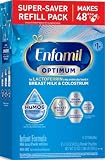
- PEDIATRICIAN & PARENT TRUSTED: Enfamil is the #1 trusted infant formula brand by pediatricians* making Enfamil Optimum baby formula a reliable choice for growing families. Optimum is premium baby formula for infants through 12 months of age
- GIVE YOUR BABY OUR BEST: CHOOSE OUR SUPER BLEND! Enfamil Optimum infant formula has lactoferrin to support immune health, MFGM to support brain development, and a dual prebiotic blend (2'-FL & LnNT) to support gut health. Premium nutrition and daily feedings.
- LACTOFERRIN FOR IMMUNE SUPPORT: This breast milk-inspired formula has lactoferrin, to support your baby's developing immune system. Enfamil Optimum helps nourish your baby's immune system as part of daily infant nutrition.

- HAS AN EXCLUSIVE BLEND OF 5 PREBIOTICS: Similac 360 Total Care has an added blend of 5 HMO prebiotics structurally identical to 5 of those found in breast milk
- 360 WHOLE-BABY SUPPORT: Nutrition designed to help support the immune system, brain development, and digestive health
- 5 BENEFITS: Normal growth, tolerance, immune support, brain development (language and social development), and gut health

- FORMULA MADE WITH WHOLE COW’S MILK: The ONLY infant formula made with whole milk and an exclusive blend of 5 immune‑nourishing prebiotics
- WHOLE MILK FATS: Made with whole cow’s milk to provide a fat blend closer to the fats in breast milk; it’s our closest formula to breast milk
- OUR CLOSEST PREBIOTIC BLEND TO BREAST MILK: Similac 360 Total Care formulas have 5 immune‑nourishing prebiotics structurally identical to 5 of those found in breast milk; our 360 Total Care formula innovation is based on over 30 years of HMO research

- NEW LOOK, SAME PREMIUM NUTRITION: Previously known as Enspire Optimum Gentlease, Enfamil Optimum Gentlease Baby Formula now has a refreshed look and name while offering the same trusted infant nutrition parents rely on.
- OUR CLOSEST FORMULA TO BREAST MILK: Enfamil Optimum Gentlease is the first and only leading baby formula to include lactoferrin, a key immune-supporting protein found in colostrum and breastmilk.
- PARTIALLY HYDROLYZED PROTEINS: Easy-to-digest broken down proteins, specially formulated to help ease fussiness, crying, gas and spit-up in 24 hours SUPPORTS IMMUNE & BRAIN DEVELOPMENT: This premium formula includes lactoferrin, a dual prebiotic blend (2'FL & LnNT), and brain-building DHA—all clinically-tested ingredients.
Finding the Formula Closest to Breast Milk: A Parent’s Guide
Choosing infant formula can feel overwhelming. Many parents want a formula that mimics breast milk as closely as possible. This guide helps you understand what to look for.
What Makes a Formula “Closest to Breast Milk”?
Breast milk is the gold standard for infant nutrition. It’s a living fluid that changes to meet your baby’s needs. Formula makers try to replicate its key components. They focus on:
- Nutrient Profile: Matching the amounts of protein, fats, carbohydrates, vitamins, and minerals found in breast milk.
- Digestibility: Making the formula easy for tiny tummies to break down and absorb.
- Bioavailability: Ensuring the nutrients are readily used by your baby’s body.
Key Features to Look For
When you’re shopping, keep these features in mind:
1. Protein Source
- Whey-to-Casein Ratio: Breast milk has a higher proportion of whey protein, which is easier to digest. Look for formulas that have a similar ratio to breast milk (around 60:40 whey to casein). Some formulas offer “partially hydrolyzed” whey protein, meaning it’s broken down into smaller pieces for easier digestion.
- Type of Protein: Most formulas use cow’s milk protein. If your baby has a cow’s milk allergy, you’ll need a specialized formula (like soy or extensively hydrolyzed).
2. Fat Blend
- Essential Fatty Acids: Breast milk contains important fats like DHA and ARA. These are crucial for brain and eye development. Most formulas add these.
- Fat Structure: Some formulas aim to mimic the structure of fats in breast milk, which can affect absorption.
3. Carbohydrates
- Lactose: Lactose is the primary carbohydrate in breast milk. Formulas that use lactose as their main sugar source are often preferred. Some may use corn syrup solids or other sugars.
4. Prebiotics and Probiotics
- Gut Health: Breast milk contains prebiotics (food for good gut bacteria) and sometimes probiotics (live beneficial bacteria). Formulas with added prebiotics (like GOS or FOS) can support a healthy digestive system.
5. Nucleotides
- Immune Support: These are building blocks for DNA and RNA. They play a role in immune function and gut health. Many formulas include them.
Important Materials and Ingredients
- Milk Base: Usually cow’s milk.
- Vegetable Oils: A blend to provide necessary fats.
- Lactose: As a primary carbohydrate.
- Vitamins and Minerals: A comprehensive mix to meet nutritional needs.
- DHA and ARA: Omega-3 and Omega-6 fatty acids for development.
- Prebiotics (GOS, FOS): To support gut health.
Factors That Improve or Reduce Quality
- Improved Quality:
- Formulas that closely match breast milk’s macronutrient (protein, fat, carbs) and micronutrient (vitamins, minerals) profile.
- Inclusion of prebiotics and nucleotides.
- Use of lactose as the primary carbohydrate.
- Partially or extensively hydrolyzed proteins for easier digestion.
- Reduced Quality (or less ideal for some babies):
- Formulas with added sugars like sucrose or corn syrup solids as the main carbohydrate.
- Formulas that don’t include DHA and ARA.
- Formulas with whole proteins if your baby struggles with digestion.
User Experience and Use Cases
Parents often choose formula closest to breast milk because:
- Transitioning: When switching from breastfeeding to formula feeding, or supplementing.
- Digestive Issues: For babies who experience gas, fussiness, or constipation on other formulas.
- Nutritional Goals: To provide the most complete and balanced nutrition possible.
Most formulas are used by mixing powder with water or by using ready-to-feed liquids. Always follow the instructions on the package carefully.
Frequently Asked Questions (FAQ) about Infant Formula Closest to Breast Milk
Q: What is the main goal when making formula “closest to breast milk”?
A: The main goal is to match the nutritional composition and digestibility of breast milk.
Q: Is there one formula that is exactly like breast milk?
A: No, breast milk is unique and changes. Formulas are designed to be as close as possible nutritionally.
Q: Why is the whey-to-casein ratio important?
A: Breast milk has more whey, which is easier for babies to digest. A similar ratio in formula helps with digestion.
Q: Should I look for lactose in formula?
A: Yes, lactose is the primary sugar in breast milk. Formulas with lactose are often preferred.
Q: What are DHA and ARA, and why are they in formula?
A: DHA and ARA are important fats that help with baby’s brain and eye development. They are added to formula to mimic breast milk.
Q: What are prebiotics and probiotics in formula?
A: Prebiotics feed good bacteria in the gut. Probiotics are good bacteria themselves. They help support a healthy digestive system.
Q: My baby is gassy. Should I switch to a formula closer to breast milk?
A: A formula with partially hydrolyzed protein or a different carbohydrate source might help. Talk to your pediatrician.
Q: Can I mix different formulas together?
A: It’s generally not recommended to mix different formulas. Stick to one type unless advised by your doctor.
Q: How long should I use formula?
A: Most babies use formula until they are around 12 months old. Your pediatrician can give you specific advice.
Q: Where can I get advice if I’m unsure about formula choice?
A: Always consult your pediatrician or a healthcare professional. They can recommend the best formula for your baby.

Hi, I’m Tom Scalisi, and welcome to The Saw Blog! I started this blog to share my hands-on experience and insights about woodworking tools—especially saws and saw blades. Over the years, I’ve had the chance to work with a wide range of tools, and I’m here to help both professionals and hobbyists make informed decisions when it comes to selecting and using their equipment. Whether you’re looking for in-depth reviews, tips, or just advice on how to get the best performance out of your tools, you’ll find it here. I’m excited to be part of your woodworking journey!