
Imagine this: you’re in the middle of an intense game, the enemy is sneaking up behind you, and you hear the faintest rustle of leaves. But wait, was that a twig snapping, or just static in your headphones? The difference between victory and defeat can come down to the sounds you hear. Yet, when it comes to picking the perfect gaming audio interface, many gamers feel lost in a sea of technical jargon and confusing features.
Choosing the right audio interface for your gaming setup can be surprisingly tricky. You want clear communication with your teammates, immersive sound effects that pull you into the game world, and maybe even the ability to record your epic wins. But how do you get that without breaking the bank or getting tangled in complicated settings? Many struggle to find an interface that balances quality, ease of use, and affordability.
This post is here to cut through the noise. We’ll break down what makes a gaming audio interface great, what to look for, and how to avoid common pitfalls. By the end, you’ll have a much clearer picture of how to choose an interface that will truly elevate your gaming experience, from crystal-clear voice chat to heart-pounding soundscapes. Let’s dive into what makes a gaming audio interface essential.
Top Gaming Audio Interface Recommendations
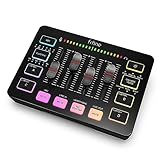
- [XLR Mic Input] One XLR microphone input interface is set on the gaming audio mixer, which is great to up your audio quality with your XLR setup. The XLR mixer is a stepping stone to upgrade your live streaming. Audio mixer offered built-in 48V phantom power which opens up more choices for mics. Directly use it with your condenser microphone but do not solve added peripherals. (NOT available for USB mic)
- [Individual Channel Control] Gaming audio mixer for one mic recording with smooth volume slider fader take your streaming recording to a whole new level with full pleasure. Four independent channels set on the DJ mixer give audio volume of the MICROPHONE, LINE IN, HEADPHONE, and LINE OUT channels individual control. Configurable on the PC audio mixer instead of just operating on your game or streaming software.
- [Mute and Monitor] The front mute and monitor buttons but not at the back, make it easier to get the audio interface use. Ability to mute audio, the audio mixer for streaming prevents background noise from damaging your live broadcast. Real-time feedback between speaking and hearing will not distract your attention, which encourage you to speak more confidently. The sturdy-built control button allow you to operate freely and easily during live streaming.
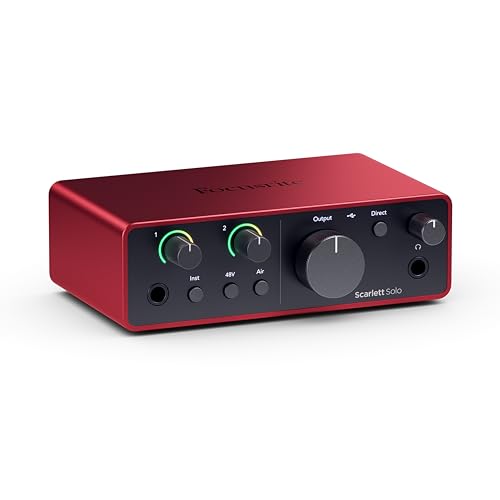
- The new generation of the songwriter's interface: Plug in your mic and guitar and let Scarlett Solo 4th Gen bring big studio sound to wherever you make music
- Studio-quality sound: With a huge 120dB dynamic range, the newest generation of Scarlett uses the same converters as Focusrite’s flagship interfaces, found in the world's biggest studios
- Find your signature sound: Scarlett 4th Gen's improved Air mode lifts vocals and guitars to the front of the mix, adding musical presence and rich harmonic drive to your recordings
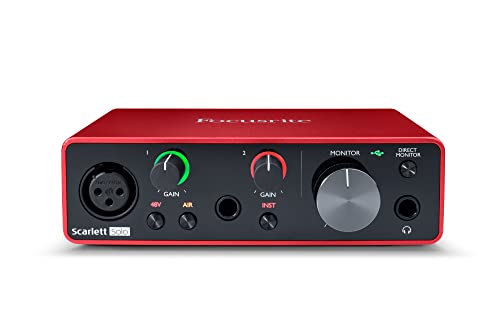
- Pro performance with great pre-amps - Achieve a brighter recording thanks to the high performing mic pre-amps of the Scarlett 3rd Gen. A switchable Air mode will add extra clarity to your acoustic instruments when recording with your Solo 3rd Gen
- Get the perfect guitar and vocal take with - With two high-headroom instrument inputs to plug in your guitar or bass so that they shine through. Capture your voice and instruments without any unwanted clipping or distortion thanks to our Gain Halos
- Studio quality recording for your music & podcasts - Achieve pro sounding recordings with Scarlett 3rd Gen’s high-performance converters enabling you to record and mix at up to 24-bit/192kHz. Your recordings will retain all of their sonic qualities
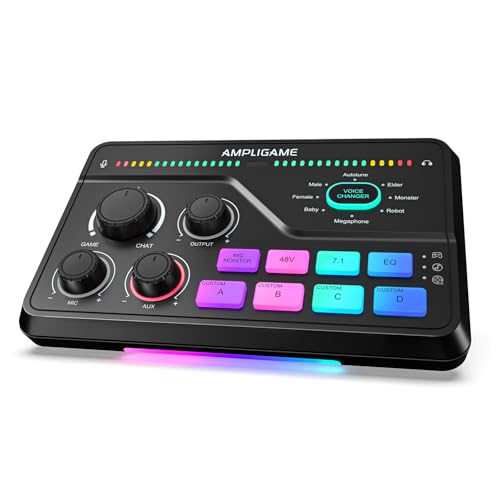
- Upgrade Mic Clarity with XLR Power-Unlock studio-quality voice capture: The 48V phantom power XLR port supports high-sensitivity mics up to -50dB gain, while the Dynamic/Condenser toggle adapts to any microphone type. With <0.2% distortion and 75dB SNR, your comms cut through explosions crisply. Adjust mic monitoring via output knob on the gaming mixer keeping you aware of voice levels—perfect for intense FPS callouts.
- Seamless Multi-Platform Audio Control-Command all your gear: Optical AUX connects PS4/TV, 3.5mm AUX-In mixes commentary audio, and USB-C PnP works instantly across PC/PS5/Switch/mobile. The 3 smart knobs include push-mute volume controls—adjust mic, game, or background audio without tabbing out.
- Game/Chat Balance Dial & 7.1 Immersion-Dominate squad coordination: Twist the dedicated Game/Chat knob to prioritize enemy footsteps or teammate comms. Coupled with virtual 7.1 surround and 3 EQ presets (Game/Music/Movie), hear Valorant spike defuses from any directions while Discord chats stay crystal-clear.

- Tactile Control, Visual Feedback: LCD keys, touch strip, and dials for audio, video, lighting, and more. Know that your command has been executed.
- Fully Customizable: Use as an audio mixer, studio controller, production console, etc.
- Multi Actions, Smart Profiles: trigger multiple actions at once or sequentially, automatically switch between interface configurations for different apps.

- Essential Kit for Streaming Setup: MAONOCASTER G1 NEO is the essential gear for gamers and up-and-coming streamers diving into the world of gaming streaming. This gaming mixer not only delivers outstanding sound performance but also integrates customized sound effects and captivating RGB lighting to immerse you in gaming or streaming. Its compact design and user-friendly interface provide an enjoyable and easier gaming experience, making it easier for you to achieve victory
- Enhance Your Voice: Build in Pro-preamp and 48V phantom power to fully unleash the potential of your XLR microphone, allowing you to quickly and easily achieve the high-quality audio typically associated with streaming setups. The perfect coordination of gain and volume can allow your teammates to hear a sufficiently loud sound. Just one-click noise reduction ensures clear audio for your teammates whether strategizing with them or interacting with viewers during live streams
- Customize Your Sound Effect: The voice change feature allows you to bring a whole new dimension to your gaming streams, you can become the female, male, baby, or robot, creating an engaging and entertaining experience for your viewers. Utilize custom sound pads to create your voice tag, quickly increase popularity, unleash potential, and expand your audience reach. You can even use the reverb and sidechain features to sing a song to your teammates, and they will be amazed by your singing

- This sound card is not compatible with 48V dynamic microphones or USB microphones. It only supports XLR microphones. (Note: Connecting an XLR microphone requires a 1/4" TRS to XLR cable, which is available as part of a promotional offer and must be added separately.)
- All-in-One Audio Interface for Streaming – This mixer works as a complete audio hub for live streaming, podcasting, and gaming. It features a 1/4" TRS dynamic microphone input, built-in reverb, 4 custom sound effects pads, and a voice changer, so you can enhance your voice and engage your audience with creative audio in real time.
- Effective Noise Cancellation – Equipped with advanced noise reduction technology, the PUPGSIS mixer filters out background hum, fan noise, and other unwanted sounds. Your viewers will hear only your clear, professional voice – ideal for noisy gaming rooms or home studios.
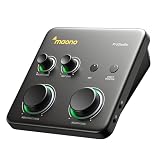
- HYBRID CONNECTIVITY: Dual USB ports with MFi-certified connectivity connect your computer and phone or iPad simultaneously. Record in GarageBand or Logic Pro, then stream or upload guitar & vocal covers directly from your mobile device. No workflow interruptions. The MAONO P1 USB-C audio interface instantly records to Mac, PC, iPhone, Android, or cameras. Perfect for creators and streamers who need total workflow freedom to record anywhere, anytime
- STUDIO-GRADE AUDIO: Up to 70dB gain drives hungry-gain dynamic microphones flawlessly—no external booster. Capture every vocal and guitar nuance in 24-bit/192kHz quality. Features a class-leading -130dB EIN for dead-silent recording in home studios. ASIO support deliver clean recordings and lower-latency monitoring for solo creators or music production
- STREAM AND RECORD WITHOUT THE GUESSWORK: Built for podcasters, streamers, and musician creators. Auto-Gain sets the ideal microphone level for clear voice capture in OBS Studio, eliminating manual gain adjustments. Independent mute prevents unwanted noise during guitar or bass changes, while independent headphone and monitor mute controls provide greater flexibility during streaming and recording. Stream Mode sends your voice equally to both channels for a balanced listening experience
Level Up Your Sound: The Ultimate Gaming Audio Interface Buying Guide
Ready to hear every whisper, explosion, and epic soundtrack in crystal-clear detail? A gaming audio interface can transform your audio experience. It’s like upgrading from a blurry TV to a super sharp one, but for your ears! This guide will help you pick the perfect one.
What is a Gaming Audio Interface?
Think of it as a special box that connects your microphone and headphones to your computer. It makes your sound way better than just plugging things directly into your computer. It helps your voice sound clearer when you talk to your friends and makes game sounds more immersive.
Key Features to Look For
When you’re shopping, keep these important things in mind:
1. Connectivity Options
- USB: Most interfaces use USB. It’s easy to plug in and works with most computers. Look for USB 2.0 or higher for the best speed.
- Phantom Power (+48V): This is a special power boost for certain microphones, like the fancy condenser mics. If you plan to use one of those, make sure your interface has it.
- Inputs and Outputs: How many things do you want to plug in?
- Mic Inputs: Do you stream with friends and need to plug in multiple mics? Most gaming interfaces have at least one or two.
- Line Inputs: These are for other sound sources, like musical instruments if you’re a gamer who also plays music.
- Headphone Outputs: You’ll definitely want at least one headphone jack. Some have two so a friend can listen in.
- Line Outputs: These connect to speakers.
2. Sound Quality (Resolution and Sample Rate)
- Resolution (Bit Depth): This is how much detail the audio can capture. 24-bit is common and great for gaming. It’s like having more colors to paint a picture.
- Sample Rate (kHz): This is how often the sound is measured. 44.1kHz or 48kHz are standard and perfectly fine for gaming. Higher numbers might be better for professional music, but for games, these are excellent.
3. Latency
- Low Latency: This is super important! Latency is the tiny delay between when you make a sound (like speaking or hitting a button) and when you hear it. You want this delay to be as small as possible so your audio feels real-time. A good interface keeps latency very low.
Important Materials and Build Quality
Most good audio interfaces have a metal casing. This makes them strong and helps protect the electronics inside. Plastic casings can work, but metal feels more durable and professional. Check if the knobs and buttons feel sturdy and not wobbly.
Factors That Improve or Reduce Quality
- Preamp Quality: This is the part that boosts your microphone’s signal. A good preamp makes your voice sound clear and strong without adding unwanted noise. Higher-quality preamps are a big plus.
- Digital-to-Analog Converter (DAC) / Analog-to-Digital Converter (ADC): These are like the translators for your audio. Good DACs and ADCs make sure the sound going into your computer and coming out to your headphones is as accurate and clean as possible.
- Driver Stability: The software that lets your computer talk to the interface needs to be stable. Unstable drivers can cause crackling sounds or make the interface stop working. Reading reviews helps here!
User Experience and Use Cases
- For Streamers: If you stream your gameplay, a good audio interface makes your voice sound professional. Your viewers will hear you clearly, making your stream more enjoyable. You can also connect multiple microphones if you have guests.
- For Serious Gamers: Want to hear every footstep or distant shot? An interface with great sound quality and low latency helps you react faster. It immerses you deeper into the game world.
- For Content Creators: Beyond streaming, if you record voiceovers for videos or podcasts, an interface ensures your audio is top-notch.
- Easy Setup: Most interfaces are plug-and-play. You just connect them, and your computer usually recognizes them. Some might need a small software download, called drivers.
Frequently Asked Questions (FAQ)
Q: What is the main benefit of a gaming audio interface?
A: The main benefit is much better sound quality for both your voice and game audio, and lower delay so everything sounds live.
Q: Do I need an audio interface for gaming?
A: You don’t *need* one, but it makes a huge difference if you want clearer sound for yourself and others, and a more immersive gaming experience.
Q: What’s the difference between a USB mic and an audio interface?
A: A USB mic has the interface built inside it. An audio interface is a separate box that lets you plug in better microphones and headphones, and often more than one.
Q: Can I use an audio interface for music too?
A: Yes! Many audio interfaces are used by musicians. They are great for recording instruments and vocals.
Q: How do I connect an audio interface to my computer?
A: You usually connect it with a USB cable. Then you plug your microphone and headphones into the interface.
Q: What does “low latency” mean for gaming?
A: It means there’s almost no delay between what you do or say and when you hear it. This is crucial for fast-paced games.
Q: Do I need special software for an audio interface?
A: Most of the time, your computer recognizes the interface. Sometimes, you’ll need to download free “drivers” from the manufacturer’s website to get the best performance.
Q: How much should I expect to spend on a gaming audio interface?
A: You can find good ones starting around $100, with more advanced models going up to $300 or more.
Q: Will an audio interface make my game sounds louder?
A: It can make them clearer and more detailed, which might make them *seem* louder. It also gives you more control over volume levels.
Q: Can I plug in two microphones into one interface?
A: Many gaming audio interfaces have two mic inputs, so yes, you can plug in two microphones if you need to.

Hi, I’m Tom Scalisi, and welcome to The Saw Blog! I started this blog to share my hands-on experience and insights about woodworking tools—especially saws and saw blades. Over the years, I’ve had the chance to work with a wide range of tools, and I’m here to help both professionals and hobbyists make informed decisions when it comes to selecting and using their equipment. Whether you’re looking for in-depth reviews, tips, or just advice on how to get the best performance out of your tools, you’ll find it here. I’m excited to be part of your woodworking journey!