
Ever wondered how ethical hackers get their Wi-Fi information or test their own networks? It often starts with a special tool called a Wi-Fi adapter. But when you’re using Kali Linux, a powerful operating system for security tasks, picking the *right* adapter can feel like searching for a needle in a haystack. So many adapters look alike, and you need one that works perfectly with Kali’s commands and tools.
Choosing the wrong adapter means you might not be able to capture the data you need, or your tools might not work at all. That’s a frustrating waste of time! You might also worry about spending money on an adapter that won’t be compatible. This post is here to help you solve that problem.
By the end of this guide, you’ll know what makes a Wi-Fi adapter great for Kali Linux. We’ll break down the important features and show you how to find an adapter that will let you explore the world of network security with confidence. Let’s dive in and find the perfect adapter for your Kali setup!
Top Wifi Adapter Kali Linux Recommendations
- Linux Plug-and-Play: This AXE3000 WiFi 6E Linux USB adapter works with all Linux distributions with kernel of 5.18 or newer (older kernels not supported)
- Broad Linux Compatibility: The Linux USB WiFi adapter is compatible with Ubuntu, Linux Mint, Debian, Raspberry Pi OS, Kali Linux, Fedora, Arch Linux, and more. Perfect for users running dual-boot setups, multiple distros, or virtual machines. Also supports Windows 11/10 (driver required)
- WiFi 6E Tri-Band Speeds: Get up to 1201 Mbps on 6 GHz, 1201 Mbps on 5 GHz, or 574 Mbps on 2.4 GHz with the Linux USB WIFi adapter. Ideal for coding, large file transfers, server access, and remote collaboration. Built with a Mediatek MT7921AU chipset. 6 GHz is only available on recent Linux distros or Windows 11
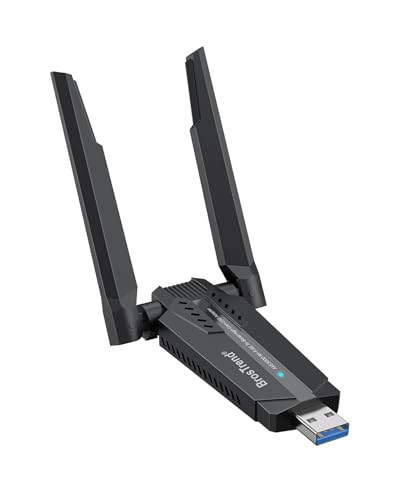
- Cutting-Edge, latest 802.11ac Wi-Fi technology. Dual-Band 2.4GHz(300Mbps) and 5GHz(867Mbps) Performance to prevent network freezing and lags when streaming and gaming online
- High-Sensitivity Dual-Band external antenna optimizes signal for more coverage
- Flexibile product positioning with Free-of-Charge USB 3.0 cradle for better signal reception
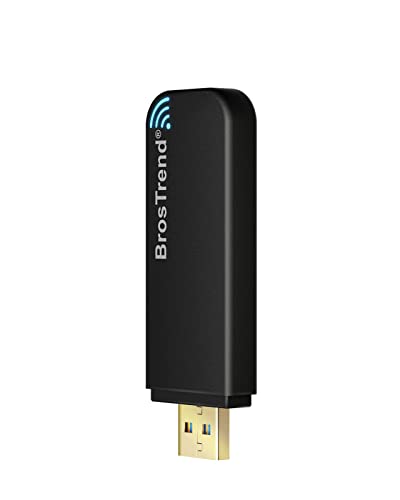
- Linux Plug-and-Play: Designed for Linux OSes, this Linux WiFi adapter works out of the box with all distributions running kernel 6.2 or newer, using the driver built into the Linux kernel. Simply plug it in to add dual-band WiFi connectivity to your computer
- Broad Linux Compatibility: This Linux USB WiFi adapter is compatible with Ubuntu, Linux Mint, Debian, Raspberry Pi OS, Kali Linux, Fedora, Arch Linux, Manjaro, and more. For Linux kernels older than 6.2, our manual driver installer supports Debian-based distributions running kernels 4.4–7.0
- AC1200 Dual-Band WiFi: Upgrade your desktop PC or laptop with speeds up to 867 Mbps on the 5 GHz band or 300 Mbps on 2.4 GHz. This WiFi USB adapter delivers fast wireless connectivity for HD/4K streaming, web browsing, and everyday use. Built with a Realtek RTL8812BU or RTL8822BU chipset. Bluetooth is not supported
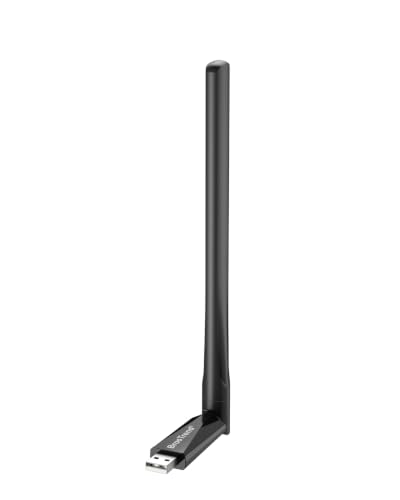
- Linux Plug-and-Play: Designed for Linux OSes, this Linux WiFi adapter works out of the box with all distributions running kernel 6.2 or newer, using the driver built into the Linux kernel. Simply plug it in to add dual-band WiFi connectivity to your computer
- Broad Linux Compatibility: This USB WiFi Linux is compatible with Ubuntu, Linux Mint, Debian, Raspberry Pi OS, Kali Linux, Fedora, Arch Linux, Manjaro, and more. For Linux kernels older than 6.2, our manual driver installer supports Debian-based distributions running kernels 4.4–7.0
- AC650 Dual-Band WiFi: Upgrade your desktop PC or laptop with speeds up to 433 Mbps on the 5 GHz band or 200 Mbps on the 2.4 GHz band. This USB WiFi adapter provides reliable wireless connectivity for streaming, web browsing, and everyday use. Built with a Realtek RTL8811CU chipset
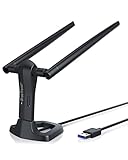
- MULTI-OS SUPPORTED: Compatible with all distributions that have Linux kernel 6.2 or newer (after February 2023), such as Ubuntu 24.10~16.04 (all flavors: Kubuntu, Lubuntu, Xubuntu, Edubuntu, GNOME, Budgie, Cinnamon, Kylin, MATE, Studio, Unity), Raspberry Pi OS 12~8, Debian 13~8, Linux Mint 22~18, Kali, Bodhi Linux, elementary OS, Feren OS, Freespire, KDE neon, Linux Lite, LinuxFX, LXLE, Netrunner, Nitrux, Peppermint OS, Trisquel, Voyager, Zorin OS; Windows 11/10/8.1/8/7
- SUPPORTED ARCHITECTURES: x86_64/x86_32 (PCs, VirtualBox..), aarch64/armhf (Raspberry Pi 2+, Odroid...)
- FAST WI-FI SPEED: You can get 867Mbps Wi-Fi speed on 5GHz band or 300Mbps speed on 2.4GHz band, best choice for online 4K video streaming, gaming, high quality music and Youtube by using this AC1200 dual band Ubuntu USB wireless adapter for PC; it can work 4 times faster than 802.11b/g/n USB wireless adapter

- Just plug Panda PAU0F into your laptop or desktop to unlock the dedicated WiFi 6E (6GHz) frequency band for low latency and high data throughput with any WiFi 6E router.
- Locate the most robust WiFi connection and optimal signal range using the dual adjustable antennas.
- Use Panda PAU0F on Windows 11 (not Windows 10) or Linux to connect to any WiFi 6E router in 6GHz frequency band.
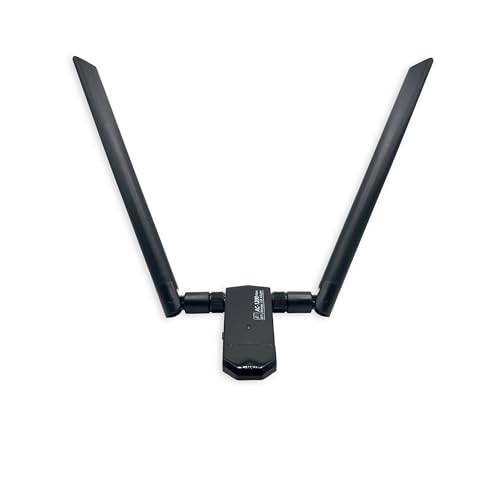
- Linux-Focused AC1200 WiFi Adapter: Realtek RTL8812AU dual-band USB WiFi adapter supports 2.4GHz and 5GHz networks. Designed for Linux desktops, laptops, live environments, repair systems, gaming distributions, and advanced Kali Linux networking.
- Plug-and-Play Tested on Multiple Linux Distributions: Verified without manual driver installation on Ubuntu, Fedora Workstation, Elementary OS, openSUSE, Garuda Linux, Bazzite, Solus Budgie, Batocera, CachyOS, and Arch Linux. Compatibility can vary by kernel, system, and distribution version.
- Kali Linux Driver and Offline Setup Available: Kali requires RTL88xxAU driver installation before a usable wireless interface appears. Online instructions and a downloadable driver package are provided for offline installation, monitor mode setup, and authorized packet-injection testing.

- Wireless Standards IEEE 802.11ac/a/b/g/n
- Wireless Frequency: 2.4 GHz / 5 GHz; Wireless Data Rate: 2.4 GHz-up to 300 Mbps, 5 GHz-up to 867 Mbps.
- Interface: USB-C (includes cable); Antenna Type: 2 x Dual-Band High-gain detachable antenna.
Your Guide to the Best WiFi Adapter for Kali Linux
Getting the right WiFi adapter makes a big difference when you’re using Kali Linux. It’s your gateway to exploring networks and testing security. This guide helps you pick the best one for your needs.
Key Features to Look For
When you’re shopping for a WiFi adapter for Kali Linux, some features are super important.
- Chipset Compatibility: This is the brain of your adapter. Make sure it works well with Kali Linux. Look for chipsets like Atheros, Ralink, or Realtek that are known to be supported.
- Monitor Mode: This lets your adapter “listen” to all the WiFi traffic around it. It’s essential for tasks like packet sniffing.
- Packet Injection: This allows you to send your own data packets. It’s needed for certain penetration testing tools.
- USB 3.0: Faster speeds mean quicker data transfer. This is helpful for downloading large files or analyzing network traffic.
- Antenna: Some adapters have built-in antennas, while others let you connect bigger, more powerful external antennas. External antennas can improve your range and signal strength.
Important Materials and Build Quality
The way an adapter is built matters. Good materials mean it will last longer and work better.
Most WiFi adapters use sturdy plastic for their casing. Some might have metal parts for better heat dissipation. A well-built adapter feels solid and not cheap. Avoid adapters that feel flimsy or have loose parts. The USB connector should also be strong and fit snugly.
Factors That Improve or Reduce Quality
A few things can make your WiFi adapter work great or not so great.
Factors That Improve Quality:
- Reputable Brands: Stick with well-known brands that are popular in the Kali Linux community. They usually have better support and drivers.
- Good Drivers: The software (drivers) that let your adapter talk to Kali Linux is crucial. Make sure the adapter you choose has easy-to-install and reliable drivers.
- Strong Signal: A good adapter can pick up weak signals and maintain a stable connection.
Factors That Reduce Quality:
- Poor Chipset Support: If Kali Linux doesn’t have good support for an adapter’s chipset, it won’t work properly.
- Cheaply Made: Flimsy construction can lead to overheating or connection problems.
- Outdated Technology: Using older standards like 802.11g might be too slow for modern tasks.
User Experience and Use Cases
How you use your WiFi adapter will shape your experience.
For beginners, a simple adapter that plugs in and works right away is best. You can use it for basic network scanning and connecting to WiFi. More experienced users might want adapters that can handle advanced penetration testing. This includes capturing WiFi passwords or testing the security of home networks.
Common uses include:
- Network Scanning: Discovering all the devices on a WiFi network.
- Packet Analysis: Examining the data that travels over a network.
- Penetration Testing: Testing the security of wireless networks.
- Capturing WiFi Traffic: Observing the flow of information.
Frequently Asked Questions (FAQ)
Q: What is the most important thing to look for in a WiFi adapter for Kali Linux?
A: The most important thing is chipset compatibility. You need an adapter whose chipset is well-supported by Kali Linux so that the drivers work correctly.
Q: Do I need an adapter that supports monitor mode?
A: Yes, if you plan to do any network analysis or security testing. Monitor mode is essential for capturing WiFi traffic.
Q: Can I use any WiFi adapter with Kali Linux?
A: Not all WiFi adapters work perfectly with Kali Linux. It’s best to choose one known to be compatible to avoid driver issues.
Q: What does packet injection mean?
A: Packet injection is the ability to send custom data packets onto a network. This is a feature needed for certain advanced security testing tools.
Q: Is USB 3.0 necessary for a WiFi adapter?
A: USB 3.0 offers faster speeds, which is helpful for data-intensive tasks. While not strictly necessary, it improves performance.
Q: Should I get an adapter with an external antenna?
A: An external antenna can significantly improve your WiFi range and signal strength, especially if you are far from the router or have many walls in between.
Q: How do I know if an adapter’s drivers will work with Kali Linux?
A: Look for adapters that are commonly recommended in Kali Linux forums or communities. These usually have readily available and tested drivers.
Q: What are some common chipsets that work well with Kali Linux?
A: Popular chipsets include Atheros (e.g., AR9271), Ralink (e.g., RT5370, RT3070), and some Realtek models.
Q: Can I use a WiFi adapter for everyday internet browsing on Kali Linux?
A: Yes, most WiFi adapters that work well for Kali Linux can also be used for regular internet browsing.
Q: Where can I find reviews of WiFi adapters for Kali Linux?
A: You can find reviews on technology websites, YouTube channels dedicated to cybersecurity, and Kali Linux user forums.

Hi, I’m Tom Scalisi, and welcome to The Saw Blog! I started this blog to share my hands-on experience and insights about woodworking tools—especially saws and saw blades. Over the years, I’ve had the chance to work with a wide range of tools, and I’m here to help both professionals and hobbyists make informed decisions when it comes to selecting and using their equipment. Whether you’re looking for in-depth reviews, tips, or just advice on how to get the best performance out of your tools, you’ll find it here. I’m excited to be part of your woodworking journey!