
Is your baby pushing away the bottle, leaving you feeling frustrated and exhausted? You are not alone. Many parents face the stressful challenge of bottle refusal when they try to transition from breastfeeding or introduce formula. It can feel like you are fighting a losing battle every time you offer a feed, and the worry about your baby getting enough nutrition is incredibly overwhelming.
The market is flooded with hundreds of different brands, shapes, and nipple styles, making the search for the “perfect” bottle feel like a guessing game. Choosing the wrong one often leads to more tears, wasted money, and even more stress for both you and your little one. It is easy to feel defeated when every product you try ends up on the shelf collecting dust.
In this post, we take the guesswork out of your search. We will explore the specific features that actually make a difference for picky babies and highlight the top-rated bottles designed to mimic the natural breastfeeding experience. By the end of this guide, you will feel empowered with a clear strategy to help your baby accept the bottle with ease. Let’s dive into the best solutions to help you and your baby find peace at feeding time.
Top Bottles For Bottle Refusal Recommendations

- EASILY ACCEPTED BY BABY - Our BPA-free plastic bottles are newborn essentials that feature ultra-soft and strong silicone nipples with a wide, gentle slope that molds to baby’s mouth, ensuring a secure latch for comfortable feedings
- CLINICALLY PROVEN ANTI-COLIC SYSTEM - Lansinoh bottle nipples feature an air ventilation system designed to help limit air intake during feeding, which helps support less gas, fussiness, and spit-up for a more comfortable feeding experience
- SUPPORTS BABY-LED FEEDING – Lansinoh’s strong yet flexible bottle nipple tip stretches with baby’s sucking motion to help deliver milk at a comfortable pace. Designed to support a smooth feeding experience while helping baby feed at their own rhythm

- Anti-colic base vent for fewer bubbles and calmer feeds: Clinically studied and published in JAMA.¹ The base vent helps separate air from milk to reduce bubbles and swallowed air, supporting calmer feeds with less gas and less tummy discomfort.
- Steady, paced flow to help baby feed more comfortably: Multiple micro-openings in the nipple give your baby a smoother, more even flow of milk to help reduce gulping and frustration.
- Ultra-soft silicone for a more natural feel: Flexible, soft silicone moves as baby feeds to support natural tongue movement and a more familiar feeding experience, especially for babies transitioning from breast to bottle.

- From the #1 Hospital trusted brand for feeding
- Breast-Like Nipple Design: Unique nipple shape adapts to baby just like mom's breast
- 2x Softer Nipple*: Made with super soft, medical-grade silicone for superior, skin-like flexibility that adapts to baby's mouth, supporting a healthy, natural latch. *vs. leading bottle brands average nipple softness
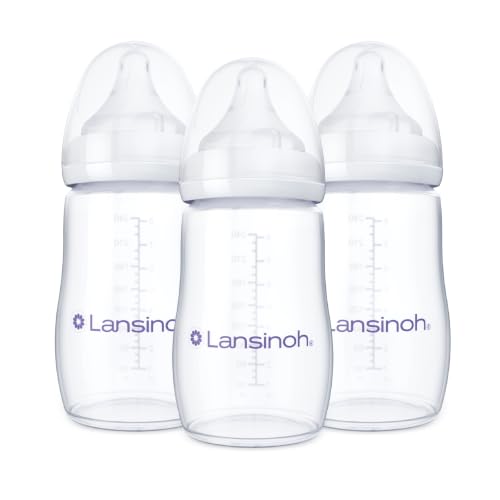
- EASILY ACCEPTED BY BABY - Our BPA-free plastic bottles are newborn essentials that feature ultra-soft and strong silicone nipples with a wide, gentle slope that molds to baby’s mouth, ensuring a secure latch for comfortable feedings
- CLINICALLY PROVEN ANTI-COLIC SYSTEM - Lansinoh bottle nipples feature an air ventilation system designed to help limit air intake during feeding, which helps support less gas, fussiness, and spit-up for a more comfortable feeding experience
- SUPPORTS BABY-LED FEEDING – Lansinoh’s strong yet flexible bottle nipple tip stretches with baby’s sucking motion to help deliver milk at a comfortable pace. Designed to support a smooth feeding experience while helping baby feed at their own rhythm

- LESS GAS, LESS FUSSINESS: The vented base releases air out of the bottle while the Anti-Colic nipple lets air flow in so the baby feeds at its own pace. Together they cut swallowed air and bubbles, clinically proven to reduce colic symptoms in 80% of babies.
- BREASTFEEDING FRIENDLY: Designed with medical professionals using ultrasound studies of nursing infants, the Anti-Colic nipple's shape and texture mimic breastfeeding for a 94% acceptance rate, easing the switch between breast, bottle, and mixed feeding routines.
- KNOW YOUR BABY'S PACE: Sleepiness, fussing, or long feeds signal too slow. Coughing or excess milk signals too fast. Check regularly and replace at first sign of bite marks or damage. MAM nipples flow faster than most brands at the same stage.
- Anti-colic base vent for fewer bubbles and calmer feeds: Clinically studied and published in JAMA.¹ The base vent helps separate air from milk to reduce bubbles and swallowed air, supporting calmer feeds with less gas and less tummy discomfort.
- Steady, paced flow to help baby feed more comfortably: Multiple micro-openings in the nipple give your baby a smoother, more even flow of milk to help reduce gulping and frustration.
- Ultra-soft silicone for a more natural feel: Flexible, soft silicone moves as baby feeds to support natural tongue movement and a more familiar feeding experience, especially for babies transitioning from breast to bottle.

- PREMIUM BOROSILICATE GLASS: Manufactured in Europe from shatter resistant baby safe premium borosilicate glass that is scratch and stain resistant, that will not absorb stains or smells.
- ANTI-COLIC NIPPLE: Reduces gas & discomfort by letting air flow freely as your baby drinks, reducing bubbles so babies swallow less air and feed more comfortably at their own natural pace
- HIGH TEMPERATURE RESISTANCE: Safe for heating, dishwasher cleaning, and sterilizing at high temperatures. Thermal shock resistant so can be stored in the fridge or warmed.
- BOTTLE TO SIPPY TRANSITION. Transition from bottle nipple to soft silicone sippy spout to teach baby new drinking skills.
- SIPPY WITH HANDLES. Easy grip 100% silicone handles are flexible and easy to hold. Bottle handles are removable and fit most other wide-neck bottles.
- 100% SILICONE SIPPY SPOUT. Sippy spout fits any Dr. Brown’s Options+ Wide-Neck bottle when the vent system is removed.
The Ultimate Guide to Choosing Bottles for Bottle Refusal
Watching your baby refuse a bottle can be stressful. Many parents feel worried when their little one pushes the nipple away. However, the right bottle can make a big difference. This guide helps you choose the best bottle to help your baby accept feedings.
Key Features to Look For
You need specific features to mimic the natural breastfeeding experience. Look for these items when shopping:
- Wide-neck design: These mimic the shape of a breast better than narrow bottles.
- Slow-flow nipples: Babies who breastfeed often prefer a slower flow. A fast flow can overwhelm them.
- Anti-colic vents: These reduce the amount of air your baby swallows. Less gas means a happier baby during feeding.
- Soft, flexible silicone: Hard plastic nipples feel unnatural. Soft materials feel more like skin.
Important Materials
The material of the nipple matters most. Most experts suggest using medical-grade silicone. Silicone is soft, durable, and does not have a strong smell. Avoid latex if you think your baby might have an allergy. For the bottle body, glass is a great choice because it is easy to clean and does not hold odors. If you prefer plastic, always choose “BPA-free” options to keep your baby safe.
Factors That Improve or Reduce Quality
Quality depends on how well the bottle mimics nature. A high-quality bottle has a base that allows the baby to latch deeply. If the nipple is too short or too stiff, the baby will likely reject it. Another factor is the number of parts. Bottles with too many small pieces are hard to clean. If a bottle stays clean easily, it stays in better condition for longer.
User Experience and Use Cases
Every baby is unique. Some babies like a specific brand immediately. Others need time to adjust. Use a bottle when your baby is calm and hungry, but not starving. If the baby is too hungry, they might get frustrated. Many parents find success by having someone other than the breastfeeding parent offer the bottle. This stops the baby from smelling the milk they expect from the breast.
10 Frequently Asked Questions
Q: Why does my baby refuse the bottle?
A: Many babies prefer the comfort of the breast. They might also dislike the flow rate or the texture of the nipple.
Q: Should I try many different bottles?
A: Start with one or two types. Changing bottles too often can confuse your baby.
Q: What is the best age to introduce a bottle?
A: Most experts suggest introducing a bottle between 3 and 6 weeks old if you plan to return to work.
Q: Does the temperature of the milk matter?
A: Yes. Many babies prefer their milk to be at body temperature, just like breast milk.
Q: How do I know if the flow is too fast?
A: If your baby coughs, chokes, or spills milk while drinking, the flow is likely too fast.
Q: Can I use a bottle if I am still breastfeeding?
A: Absolutely. Many parents use “paced bottle feeding” to keep the breastfeeding bond strong.
Q: What if my baby still refuses?
A: Be patient. Try offering the bottle during a “dream feed” when the baby is sleepy and less likely to protest.
Q: Do anti-colic bottles actually work?
A: Yes, they help many babies. They prevent air bubbles from mixing with the milk.
Q: How often should I replace the nipples?
A: You should replace silicone nipples every 2 to 3 months or sooner if you see cracks.
Q: Is glass better than plastic?
A: Glass is more eco-friendly and easier to sanitize. Plastic is lighter and will not break if dropped.

Hi, I’m Tom Scalisi, and welcome to The Saw Blog! I started this blog to share my hands-on experience and insights about woodworking tools—especially saws and saw blades. Over the years, I’ve had the chance to work with a wide range of tools, and I’m here to help both professionals and hobbyists make informed decisions when it comes to selecting and using their equipment. Whether you’re looking for in-depth reviews, tips, or just advice on how to get the best performance out of your tools, you’ll find it here. I’m excited to be part of your woodworking journey!