
Do you ever feel like your fingers are fighting your keyboard while you code? Typing complex commands can slow you down, turning your brilliant ideas into a frustrating crawl. For programmers, the keyboard is more than just a tool; it’s the direct link between your brain and the machine. A bad keyboard can cause hand strain and seriously hurt your productivity.
Choosing the perfect programming keyboard is a real headache. Should you pick mechanical switches, split layouts, or go for that fancy ergonomic design you saw online? The sheer number of choices—from keycap profiles to layout sizes—can overwhelm anyone. You want something that feels great, types accurately, and supports you through those long coding sessions without causing aches.
This post cuts through the noise. We will break down exactly what makes a keyboard great for coding. You will learn the key features that matter most for speed, comfort, and customization. By the end, you will know precisely what to look for to find your ultimate coding companion.
Top Programming Keyboards Recommendations

- 4 Extra Hotkeys, Full-Size 108-Key Anti-Ghosting - Dedicated shortcut keys default to mute, calculator, screen lock and desktop, while 104 keys register accurately even during rapid multi-key combos.
- Swap Switches Without Soldering, Smooth and Quiet - The upgraded socket accepts almost any 3-pin or 5-pin switch, and stock Red linear switches keep clicks discreet for shared spaces.
- Vibrant RGB for a True eSports Vibe - Up to 19 preset lighting modes with adjustable brightness and flow speed, including a music-sync mode that lights up in time with your desktop audio.

- Full Key Programmable: This custom keyboard supports full-key macro programming to create exclusive shortcut operations, helping you trigger complex commands with a single click and be a step ahead in the game. The unique dual-mode knob design of the black and white keyboard wireless allows you to quickly switch between gaming and office modes. In addition, with 3 programmable shortcut keys (M1/M2/M3), the usb keyboard lets you easily set up personalized functions to improve operational efficiency
- Vibrant RGB Keyboard: The led keyboard comes with 16.8 million RGB color and 16 preset light effects add more fun to your desktop. With the knob or FN+ key combination, you can freely adjust the brightness and speed of the cute keyboard's lights to create an exclusive atmosphere(FN+END can switch backlit colour effect). With the macro software, you can also customize the lights to make your silent backlit keyboard truly unique and enjoy an immersive visual experience whether you are working or gaming
- 99 Keys Compact Ergonomic Keyboard: This 96% layout retro keyboard combines vintage aesthetics with modern craftsmanship, and the integrated numeric keypad retains the familiar typing experience while freeing up more desktop space. This aula keyboard is equipped with a foldable two-stage stand, you can adjust the angle of the clicky keyboard according to your needs, reducing the pressure on your wrists and creating a more comfortable typing experience
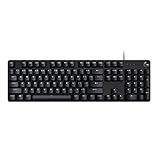
- Take your gaming skills to the next level: The Logitech G413 SE is a full-size keyboard with gaming-first features and the durability and performance necessary to compete
- PBT keycaps: Heat- and wear-resistant, this computer gaming keyboard features the most durable material used in keycap design
- Tactile mechanical switches: Uncompromising performance is always within reach with this wired gaming keyboard

- 【65% Compact Design】GEODMAER Wired gaming keyboard compact mini design, save space on the desktop, novel black & silver gray keycap color matching, separate arrow keys, No numpad, both gaming and office, easy to carry size can be easily put into the backpack
- 【Wired Connection】Gaming Keybaord connects via a detachable Type-C cable to provide a stable, constant connection and ultra-low input latency, and the keyboard's 26 keys no-conflict, with FN+Win lockable win keys to prevent accidental touches
- 【Strong Working Life】Wired gaming keyboard has more than 10,000,000+ keystrokes lifespan, each key over UV to prevent fading, has 11 media buttons, 65% small size but fully functional, free up desktop space and increase efficiency

- 🎮𝐀𝐥𝐥-𝐢𝐧-𝐎𝐧𝐞 𝐆𝐚𝐦𝐢𝐧𝐠 & 𝐎𝐟𝐟𝐢𝐜𝐞 𝐂𝐨𝐦𝐛𝐨 - 𝐔𝐧𝐛𝐞𝐚𝐭𝐚𝐛𝐥𝐞 𝐕𝐚𝐥𝐮𝐞: Experience premium features without the premium price. This complete wired set includes a full-size RGB backlit keyboard AND a high-precision gaming mouse, offering everything you need for gaming, work, or study. Perfect for first-time gamers, students, and budget-conscious users seeking a durable and responsive upgrade from basic peripherals.
- ✨𝐅𝐮𝐥𝐥𝐲 𝐂𝐮𝐬𝐭𝐨𝐦𝐢𝐳𝐚𝐛𝐥𝐞 𝐑𝐆𝐁 & 𝐌𝐚𝐜𝐫𝐨𝐬 - 𝐘𝐨𝐮𝐫 𝐂𝐨𝐧𝐭𝐫𝐨𝐥, 𝐘𝐨𝐮𝐫 𝐒𝐭𝐲𝐥𝐞: Dive into your gameplay with dynamic lighting. The keyboard features 6 vibrant backlight modes, and the mouse boasts 10 lighting effects. Easily customize colors, brightness, and patterns using the intuitive software (downloadable at redragon.com). Record complex command sequences with the 5 dedicated macro keys for a competitive edge in any game.
- 🔇𝐐𝐮𝐢𝐞𝐭, 𝐂𝐨𝐦𝐟𝐨𝐫𝐭𝐚𝐛𝐥𝐞 & 𝐑𝐞𝐬𝐩𝐨𝐧𝐬𝐢𝐯𝐞 𝐓𝐲𝐩𝐢𝐧𝐠 𝐄𝐱𝐩𝐞𝐫𝐢𝐞𝐧𝐜𝐞: Designed for marathon sessions. The soft-touch membrane keys provide satisfying feedback while remaining remarkably quiet—ideal for shared spaces, late-night gaming, or office use. The included ergonomic wrist rest reduces fatigue, and the anti-ghosting keyboard ensures every key press is registered instantly, even during intense action.
The Ultimate Buying Guide for Programming Keyboards
Choosing the right keyboard can make coding feel much smoother. A good programming keyboard helps you type faster and reduces hand strain during long coding sessions. This guide will help you pick the best one for your needs.
Key Features to Look For
When you shop, look closely at these important parts:
1. Switch Type: The Heart of the Keyboard
- Mechanical Switches: These are the most popular choice for programmers. They use individual physical switches under each key. They give clear feedback when you press them.
- Linear Switches (e.g., Cherry MX Red): These press down smoothly without a bump. They are fast and quiet, which some coders prefer.
- Tactile Switches (e.g., Cherry MX Brown): These have a small bump you feel when the key activates. This tactile feedback lets you know the key registered without needing to bottom out the key. Many programmers like these.
- Clicky Switches (e.g., Cherry MX Blue): These give both a bump and an audible “click.” They offer the most feedback but are the loudest.
2. Layout and Size
- Full-Size (104/108 keys): Includes the number pad. Good if you frequently enter numbers.
- Tenkeyless (TKL, about 87 keys): Removes the number pad. This frees up desk space, letting you keep your mouse closer to your body, which is better for your shoulder.
- Compact (60% or 65%): These are small and portable. They often require using function layers (holding a key down to access arrows or numbers). They save maximum space.
3. Programmability and Macros
High-quality programming keyboards let you remap keys. You can set up macros—single keypresses that run a series of commands. This saves huge amounts of time when typing repetitive code blocks.
Important Materials Used in Keyboards
The materials used affect how long the keyboard lasts and how it feels.
Keycaps: What You Touch
- ABS Plastic: Common and affordable. Over time, these keys can develop a shiny look from finger oils.
- PBT Plastic: More durable and resistant to shine. They feel slightly rougher, which many typists prefer. PBT keycaps usually last much longer.
Case and Plate
The case holds everything together. Metal cases (like aluminum) feel premium and add weight, which stops the keyboard from sliding around. Plastic cases are lighter and cheaper.
Factors That Improve or Reduce Quality
Good quality means a keyboard lasts longer and feels better to use.
Quality Boosters
- Hot-Swappable Sockets: These sockets allow you to pull out and replace switches without soldering. This makes customization easy.
- Durable Stabilizers: Stabilizers sit under long keys (like Spacebar, Enter, Shift). Well-lubricated, high-quality stabilizers prevent these large keys from wobbling.
- Good Cable Management: Detachable USB-C cables are often a sign of a modern, well-built board.
Quality Reducers
- Wobbly Switches: If the switches feel loose or rattle, the typing experience suffers greatly.
- Cheap Internal Mounting: A keyboard that flexes easily when you type hard suggests poor internal construction.
User Experience and Use Cases
Think about where and how you code.
Ergonomics
If you code for eight hours straight, wrist comfort matters. Look for keyboards that come with a wrist rest or have an adjustable tilt angle. Split ergonomic keyboards spread the keys out, which can reduce wrist strain.
Noise Level
If you work in a quiet office or share a room, avoid loud clicky switches. Quiet linear switches or membrane keyboards are better choices for shared spaces.
A programming keyboard is an investment in your productivity. Focus on comfortable switches and a layout that matches your workflow.
10 Frequently Asked Questions (FAQs) About Programming Keyboards
Q: Do I really need a mechanical keyboard for coding?
A: Many programmers prefer them because they offer better tactile feedback and faster response times than standard rubber dome keyboards. They generally feel much better for long typing sessions.
Q: What is “bottoming out” and why should I care?
A: Bottoming out means pressing the key all the way down until it hits the bottom plate. Some switches actuate (register the press) before the bottom, which can reduce finger fatigue if you learn to type without bottoming out.
Q: Are compact (60%) keyboards good for professional coding?
A: They are great for portability and desk space. However, you must learn function layers to access common keys like the tilde (~) or arrow keys, which adds a learning curve.
Q: What are keycaps made of, and does it matter?
A: Keycaps are usually made of ABS or PBT plastic. PBT is generally higher quality because it resists shine and wear better than ABS over many years.
Q: What is the main benefit of a hot-swappable keyboard?
A: Hot-swappable means you can pull out a switch and plug in a different one without opening the keyboard or soldering. This lets you easily test different switch types.
Q: How do I choose the right switch color (e.g., Red vs. Brown)?
A: Try to test them if possible. Brown switches offer a gentle bump that confirms the press, which many coders find helpful. Red switches are smooth and fast, ideal if you like typing quickly without tactile feedback.
Q: What is “N-Key Rollover” (NKRO)?
A: NKRO means the keyboard can correctly register every single key you press at the exact same time. This is crucial for fast typists who might press multiple modifier keys at once.
Q: Is RGB lighting useful for programming?
A: For pure coding, RGB lighting is mostly aesthetic. Some people use it to highlight specific key groups (like navigation keys) or to show macro assignments.
Q: Should I buy a keyboard with a dedicated number pad?
A: If you regularly work with spreadsheets, financial data, or need to input ASCII characters often, the dedicated number pad (Full-Size layout) saves you time.
Q: How do I clean my mechanical keyboard?
A: You should regularly use compressed air to blow out dust. Once or twice a year, carefully pull off the keycaps (using a keycap puller tool) and wipe down the exposed plate and switches.

Hi, I’m Tom Scalisi, and welcome to The Saw Blog! I started this blog to share my hands-on experience and insights about woodworking tools—especially saws and saw blades. Over the years, I’ve had the chance to work with a wide range of tools, and I’m here to help both professionals and hobbyists make informed decisions when it comes to selecting and using their equipment. Whether you’re looking for in-depth reviews, tips, or just advice on how to get the best performance out of your tools, you’ll find it here. I’m excited to be part of your woodworking journey!