
Imagine the sound of a roaring lion, a buzzing swarm of bees, or the crunch of autumn leaves underfoot. That’s the kind of powerful, textured sound guitarists chase, and often, the secret weapon is a distortion pedal. But stepping into the world of overdrive, distortion, and fuzz can feel like entering a sonic maze. You want that perfect grit, that searing solo tone, or that heavy, driving riff, but the sheer number of pedals out there can be overwhelming.
Choosing the right distortion pedal can be a real headache. Do you go for a classic rock crunch, a metalocalypse roar, or a fuzzy psychedelic trip? Each one sounds different, and the wrong choice can leave your guitar sounding weak or muddy. You might spend a lot of money and time trying to find that one pedal that truly speaks your musical language. It’s a common struggle for guitarists of all levels.
But don’t worry! This guide is here to cut through the noise. We’ll explore the different flavors of distortion, explain what makes them unique, and help you understand which one might be the perfect fit for your playing style. By the end of this post, you’ll have a much clearer picture and feel confident in finding the distortion pedal that unlocks your ultimate guitar sound.
Our Top 5 Distortion Pedal Recommendations at a Glance
Top 5 Distortion Pedal Detailed Reviews
1. BOSS DS-1 Distortion

Rating: 8.8/10
The BOSS DS-1 Distortion pedal has been a game-changer for guitarists since 1978. It’s the very first distortion pedal BOSS ever made. This compact pedal delivers a powerful, hard-edged sound with impressive sustain. It’s been a favorite for so many guitar players over the years, shaping the sound of countless songs.
What We Like:
- It gives you a strong, clear attack even when you crank up the distortion. This makes it great for heavy guitar riffs and solos that need to cut through the mix.
- You can use it as a boost pedal too. Just turn down the distortion, and it adds a nice push to your sound.
- The tone control is really cool. It lets you shape your sound in many different ways.
- It doesn’t hide the natural sound of your guitar. Whether you have single-coil or humbucker pickups, the DS-1 lets your guitar’s unique voice shine.
- When you turn down your guitar’s volume knob, the sound cleans up nicely. It doesn’t get muddy or weird.
- BOSS backs this pedal with a five-year warranty, which shows they believe in its quality.
What Could Be Improved:
- Some players find the sound can be a bit harsh at the extreme ends of the tone knob.
- While versatile, it might not offer the super-smooth, creamy distortion some players look for in certain genres.
The BOSS DS-1 Distortion pedal is a true classic for a reason. It offers a reliable, powerful distortion that works for a huge range of musical styles.
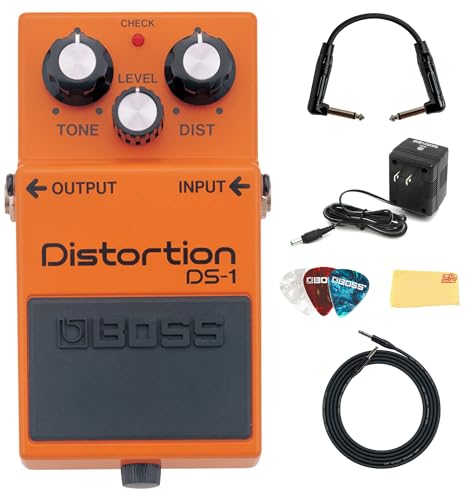
2. Boss DS-1 Distortion Bundle with Gearlux Power Supply
Rating: 9.1/10
Get ready to rock with the Boss DS-1 Distortion Bundle! This package gives you everything you need to add that classic, gritty distortion sound to your guitar or keyboard. It’s an amazing deal for anyone looking for a reliable and affordable way to get that iconic BOSS distortion tone for live shows or practice sessions. You’ll be making awesome music in no time.
-
What We Like:
- It sounds great! You get that classic BOSS distortion that’s perfect for guitar and keyboard.
- It really listens to how you play. Play soft, and it’s mellow. Strum hard, and it gets wild!
- You can easily change your sound. The Distortion, Level, and Tone knobs let you dial in exactly what you want.
- It’s built to last. BOSS backs it with a 5-year warranty, so you can be sure it’s a quality product.
- It’s a classic and won’t break the bank. This is a super affordable way to get live distortion.
- The bundle includes a Gearlux power supply, instrument cable, and patch cable so you can plug and play right away.
- You also get picks to start strumming and an Austin Bazaar polishing cloth to keep everything looking shiny.
-
What Could Be Improved:
- While it’s great for classic distortion, some players might want even more extreme or modern distortion options.
- The included cables, while functional, might not be the absolute highest quality for professional touring musicians.
This bundle is an excellent starting point for anyone wanting that legendary BOSS distortion sound without spending a lot of money. It provides all the essential accessories to get you up and running quickly.
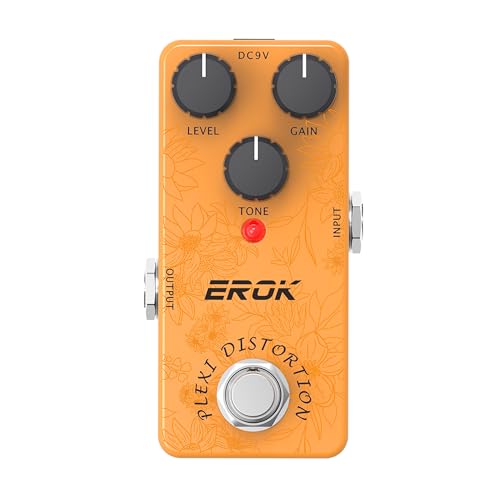
3. EROK Plexi Dis Pedal – Classic British Rock Tone
Rating: 8.8/10
Unleash the legendary sounds of classic British rock with the EROK Plexi Dis Pedal. This compact pedal packs a punch, delivering the iconic tone that defined an era. Whether you’re chasing warm, full-bodied sounds or biting, sharp textures, this pedal brings the golden age of 60s and 70s rock right to your feet. It’s built for guitarists who crave that authentic rock, blues, and even metal foundation.
What We Like:
- Captures the authentic “Plexi” British rock tone with warmth and sharpness.
- Offers an impressive gain range, from gentle overdrive to heavy metal distortion, all with one knob.
- Reacts beautifully to your guitar’s volume knob, mimicking a real tube amp’s dynamic response.
- Features Separation Technology to keep your notes clear, even during complex playing.
- Its mini size makes it a great space-saver on any pedalboard.
- True bypass ensures your pure signal passes through when the pedal is off.
What Could Be Improved:
- The power supply is not included, which is an extra purchase needed.
This pedal is a fantastic tool for any guitarist looking to add a versatile and authentic classic rock flavor to their sound. It’s a must-have for anyone who loves that timeless British crunch.
4. Donner Distortion Guitar Pedal

Rating: 9.1/10
Unleash your inner rock god with the Donner Distortion Guitar Pedal, Morpher Mini Distortion. This little powerhouse packs a serious punch, bringing you the classic sounds of 80s metal and beyond. It’s built tough and designed to make your electric guitar sing with attitude.
What We Like:
- High-Gain Distortion: This pedal gives you a powerful, crunchy distortion that sounds amazing for hair metal, glam metal, and pop metal. It’s like getting two awesome pedals in one, with tones that remind us of the MI Crunch Box and Suhr Riot.
- 3 Distortion Modes: You get three different flavor settings: Natural, Tight, and Classic Crunch. This means you can easily switch between sounds perfect for fast solos (shredding) and heavy rhythm playing (riffing). It has a wide dynamic range, meaning it picks up on all your playing nuances.
- Durable and Solid Construction: The pedal is made from a strong aluminum alloy, so it can handle being stomped on night after night. The indicator lights clearly show when it’s on and working.
- True Bypass: This is a big deal for guitarists! True bypass means that when the pedal is off, your guitar’s signal goes straight through without any change. You won’t hear any annoying pops, buzzing, or loss of sound quality.
What Could Be Improved:
- Power Supply Not Included: You’ll need to buy a separate 9V DC power adapter to make this pedal work. Make sure it has a center negative polarity and at least 500mA current for the best results.
The Donner Morpher Mini Distortion pedal is a fantastic choice for any guitarist looking to add some serious grit and versatility to their sound. It offers impressive tone options in a rugged package.
5. Kmise Crunch Distortion Electric Guitar Effects Pedal Mini Single Type DC 9V True Bypass

Rating: 9.2/10
Get ready to rock with the Kmise Crunch Distortion Electric Guitar Effects Pedal! This little powerhouse packs a serious punch of classic distortion for your guitar. It’s designed for guitarists who want a great sound without a lot of fuss. The simple design makes it easy to get the tone you’re looking for, whether you’re practicing at home or playing a gig.
What We Like:
- Noise Reduction: This pedal is super quiet. It has special coding to cut out the humming and buzzing that can happen with distortion pedals. You get a clean, clear sound.
- Pure Signal: When you turn the pedal off, your guitar’s original sound stays the same. This is called true bypass.
- Easy Control: You can easily adjust the sound with dedicated knobs for Gain, Volume, and Tone. This lets you fine-tune your distortion just the way you want it.
- Tough Build: The pedal is made from strong aluminum alloy. It’s built to last and safe to take with you anywhere.
- Portable: It’s small and light, making it perfect for carrying to gigs or practice sessions.
- Simple to Use: With just two knobs, it’s very easy to figure out and start playing.
- Great Value: It’s very affordable for the quality and sound it offers.
- Lifetime Support: The company promises to help if you have any problems, offering a great solution.
What Could Be Improved:
- Power Adapter Not Included: You’ll need to buy a DC 9V power adapter separately.
The Kmise Crunch Distortion pedal is a fantastic option for any guitarist looking for excellent distortion. Its solid build, ease of use, and great sound make it a winner.
Choosing Your Perfect Distortion Pedal
A distortion pedal changes your guitar’s sound. It adds grit, crunch, and sustain. This makes your guitar sound louder and more powerful. Distortion pedals are essential for many guitarists. They help create rock, blues, and metal tones. Finding the right one can be tricky. This guide will help you choose.
Key Features to Look For
When you shop for a distortion pedal, look at these things.
Controls
- Gain/Drive: This knob controls how much distortion you get. More gain means more fuzz and crunch.
- Tone: This knob shapes the brightness of your sound. Turn it up for a sharper sound. Turn it down for a warmer sound.
- Volume/Level: This knob controls how loud the pedal is. You can match your guitar’s clean sound or make it louder.
- 3-Band EQ (Bass, Mid, Treble): Some pedals have more detailed tone controls. These let you fine-tune your sound even more.
True Bypass vs. Buffered Bypass
- True Bypass: When the pedal is off, it completely removes itself from your signal. This keeps your clean guitar sound pure.
- Buffered Bypass: When the pedal is off, it still sends a signal through its circuits. This can help keep your signal strong, especially with many pedals.
Power Options
- Most pedals use a 9-volt power supply. Some can use batteries. Check what power source the pedal needs.
Important Materials
The stuff a pedal is made of matters. It can affect how it sounds and how long it lasts.
Metal Casing
- Pedals with strong metal cases are built to last. They can handle being stepped on during shows.
- Aluminum is a common and good material.
Quality Components
- Good quality electronic parts inside the pedal make a big difference. They help create a better sound.
- Look for pedals with well-made knobs and switches.
Factors That Improve or Reduce Quality
Some things make a pedal sound better, and some can make it sound worse.
Sound Quality
- Versatility: Can the pedal make different kinds of distortion? Some are good for light crunch, while others are perfect for heavy metal.
- Noise: A good pedal shouldn’t add too much unwanted noise or hiss to your sound.
- Musicality: Does the distortion sound good? Does it respond well to your playing?
Build Quality
- A sturdy pedal will work reliably for a long time.
- Cheaply made pedals might break easily.
User Experience and Use Cases
Think about how you’ll use the pedal.
For Beginners
- A simple distortion pedal with just a few knobs is great for starting out.
- These pedals are easy to understand and use.
For Different Music Styles
- Blues/Rock: Look for pedals that give a warm, creamy overdrive or a classic rock crunch.
- Hard Rock/Metal: You’ll want pedals that offer thick, heavy distortion with lots of sustain.
- Punk: Fast, raw, and aggressive distortion is key here.
Live Performance vs. Studio
- For live shows, you need a pedal that is reliable and easy to control on stage.
- In the studio, you might focus more on finding the perfect tone.
Frequently Asked Questions (FAQ)
Q: What’s the difference between overdrive, distortion, and fuzz?
A: Overdrive is a mild distortion that sounds like a tube amp pushed hard. Distortion is a stronger, more aggressive sound. Fuzz is a very thick, buzzy, and often vintage-sounding distortion.
Q: Do I need a special power supply for my distortion pedal?
A: Most distortion pedals use a standard 9-volt DC power supply. Always check the pedal’s requirements. Some can run on batteries too.
Q: What does “true bypass” mean?
A: True bypass means that when the pedal is turned off, it completely stops the signal from going through its circuits. This keeps your original guitar tone untouched.
Q: How do I know if a distortion pedal is good quality?
A: Look for a strong metal casing, good brand reputation, and positive reviews about its sound and durability.
Q: Can I use a distortion pedal with any guitar or amp?
A: Yes, you can use them with most electric guitars and guitar amps. The sound will change depending on your guitar and amp.
Q: Will a distortion pedal make my guitar sound louder?
A: Yes, distortion pedals often increase the volume of your signal. The volume knob lets you control how loud it is.
Q: How much should I expect to spend on a good distortion pedal?
A: You can find decent distortion pedals from $50 to $100 for beginners. High-end pedals can cost $200 or more.
Q: Can I put a distortion pedal before or after other effects?
A: Yes, the order of effects matters. Distortion usually sounds best after drives and before modulation or delay effects.
Q: What is “gain” on a distortion pedal?
A: Gain controls how much the signal is amplified and distorted. More gain means more crunch and sustain.
Q: Are there distortion pedals that sound like famous guitarists?
A: Yes, many pedals are designed to copy the sounds of iconic guitarists or specific amplifiers.
In conclusion, every product has unique features and benefits. We hope this review helps you decide if it meets your needs. An informed choice ensures the best experience.
If you have any questions or feedback, please share them in the comments. Your input helps everyone. Thank you for reading.

Hi, I’m Tom Scalisi, and welcome to The Saw Blog! I started this blog to share my hands-on experience and insights about woodworking tools—especially saws and saw blades. Over the years, I’ve had the chance to work with a wide range of tools, and I’m here to help both professionals and hobbyists make informed decisions when it comes to selecting and using their equipment. Whether you’re looking for in-depth reviews, tips, or just advice on how to get the best performance out of your tools, you’ll find it here. I’m excited to be part of your woodworking journey!